To reduce battery aging, AirPods learn from your daily charging routine so they can wait to finish charging past 80% until you need to use them
I have long speculated that the reason AirPods are much more disposable when compared to other Bluetooth devices is that fact that their poor batteries are pretty much always in constant use. They are always either in the case charging, or in your ears discharging.
I own a pair of Plantronics wireless headphones from 2015 that have much better battery life than my AirPods which were purchased in 2016. I know there are many factors at work but the speed at which the batteries on AirPods decline is staggering. I suspect (and hope) this update will dramatically increase the longevity of AirPods.
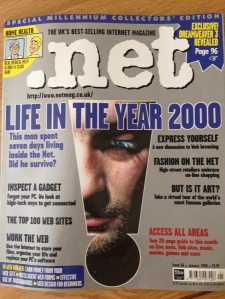
I recently came across the sad news that .net - the internet magazine published its last issue in April 2020.
.net magazine was hugely influential to me as a teenager, capturing the excitement of the Internet in the late 90s. Some of my earliest memories of using the Internet revolve around .net magazine. Within its pages I learnt many things about how the Internet works; how to configure domain names, what emoticons meant, tips to avoid spam, what a flamewar was and how to solve problems with Netscape and Outlook Express, to name a few. The first issue I remember buying (issue 54 if I recall correctly, in late 1998) even had an interview with David Bowie, talking about amongst other things, his recently launched Internet Service Provider (ISP), BowieNet. Bowie was incredibly forward thinking, however music artists running their own ISPs never did take off (though I seem to recall some who’ve been successful at making headphones). [Update: it was issue 55, and I’ve scanned the Bowie interview for anyone interested]
Even now, 22 years later, I can recall the excitement of installing the Internet Explorer 5 beta from the cover CD and marvelling at how it dramatically changed the way Windows 98 operated. Strangely, I have a memory of disconnecting from the Internet, in order to phone a hotline to get a code that would let me use one of the applications included on the cover CD, “Starfish Internet Sidekick”. The code was “MANAGER”. It’s weird how such memories stick with us. My first look at Mac OS X was from a preview in .net magazine, which touted its photorealistic icons and UNIX underpinnings - I never thought back then that one day in the year 2020 I’d be sitting at a laptop writing this, running the same OS, still using essentially the same UI paradigm, only with far less photorealistic icons.
As a teenager who wasn’t really into books, .net magazine taught me more than how to use the Internet - it helped me to increase my reading age, develop an inner voice and writing style that is still with me today.
What I looked forward to each month the most however, was waiting to see if any of my forum posts had been picked for inclusion in the ‘penny arcade’ section - where four or five of the funniest posts from the .net forums were featured in the magazine. I don’t think my posts contained enough witticisms to make it into the magazine, but just the possibility was exciting.
The .net forums were a magical community of likeminded geeks, mostly in their teens, who just loved the Internet. These days, nobody “loves the Internet” as we did then. Today that would be like having “electricity” as a hobby. Yet back from around 1999 to 2001, the .net forums were where I spent a considerable amount of time socialising (though at the age of 15, my parents didn’t think of it as being very social). I remember posting a message to the Futurenet NNTP server through Outlook Express and within minutes getting a reply. It was like Reddit, but far more humane, and because there were only about 20 or so regulars, it felt like a real community. I remember the Microsoft .NET announcement - how could Microsoft steal the name of our beloved magazine? Waiting for the world to end as Nostradamus predicted in 1999, checking that the internet still worked on January 1st 2000, and posting a link to my latest Geocities creation to the reader’s site newsgroup - eagerly awaiting feedback from fellow readers - all on the .net forums. The community faltered slightly when Future Publishing closed down the NNTP servers and moved the forums to web-based software. Thankfully many of forum regulars found a new home on IRC in #netmag on the Blitzed network. There I would spend whole weekends chatting to my friends on IRC, in-between TFC sessions. It wasn’t long after that we built a site called “DFNET - The .net reader’s site network” which further reinforced the sense of community between readers.
That idea of having your own website and even forming a community of sites is something I miss from today’s Internet. The web is now so centralised. How many ISPs even bother offering free webspace today? Back then, out of the entire online population, there was a disproportionate percentage of computer enthusiasts online, and so learning HTML and how FTP works was a challenge they would gladly take on. People created web pages about cooking, Half Life and the X-Files. It’s easy to look back and laugh at the animated Gifs, the “best viewed in Internet Explorer 4” badges and the “Sign my Guestbook” links - but a part of me mourns the loss of this amateur enthusiasm - the web is now so much more polished and corporate, and “user generated content” mostly resides on major platforms like Twitter, Facebook and IMDB. I would love for Internet providers and OS manufactures to activity encourage people to make their own websites again (remember when Windows used to include FrontPage Express?), but I think that is sadly a pipe-dream and the reality is most people aren’t interested. With modern broadband connections, personal websites could even be hosted at home - unrealistic - but part of me is nostgltigc for the dream of an Internet where everyone is an equal player.
I must have stopped subscribing to .net sometime in 2002. By then, the Internet seemed less interesting to me. Perhaps due to the .com crash or because I was 17, now at college with a Saturday job, and for some reason didn’t have time for it any more. Aged 17, the gap between 1999 and 2002 felt like a lifetime. Now, aged 35, three years ago seems like yesterday. The magazine eventually morphed into a web design magazine, focusing less on Internet culture and more on design trends and technical implementation. I picked it up again in 2009 for a year or so but as I became more professionally interested in server side technologies the design centric content wasn’t as appealing to me (I am no designer!).
Although I hadn’t read it for a many years, hearing of its demise did make me sad that a part of my childhood is no longer. I’m gutted for those who worked at the magazine and may now be out of a job. Wouldn’t it be a nice gesture if Future Publishing produced PDFs of the magazine archives (they surely must exist, right?) and put them online for historical record? I could genuinely lose hours reading Internet articles from 2000.
With all the kerfuffle over Hey.com - an exciting new email service from the makers of Basecamp, it’s important to remember that if it takes off, Hey.com will be in a similar position to Apple. Groundskeeper of the walled garden.
While the service appears to be a refreshingly original rethink on how email should work (I’ve not signed up myself), it appears to be designed to lock users in. There is no way to use an external email client, and right now there is no support for custom domains (despite being targeted at business users with a $99/year charge - they say its coming). You’ll also have to continue to pay if you decide to move to a different provider but want to keep your Hey.com address forwarding. I see no reason why the features advertised (great as they are) couldn’t be part of an email client designed by Hey.com - using a combination of cloud services and native clients, Hey could provide a powerful front-end to any open email service such as Outlook.com or Gmail which provide access via IMAP.
Instead it seems they want to lock customers in, which goes against the open, standards based approach that has made email so successful so far. Putting aside the fact Google or Microsoft could easily copy any of these features, and probably will, this is a service I’ll be skipping.
Update: thanks to Shauny for informing me that Hey.com does in fact offer free forwarding for life for customers who pay for a year’s service.
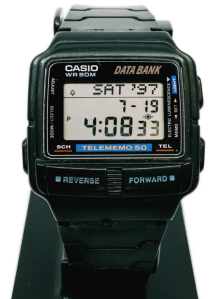
As someone who is fascinated by technology and its societal impact, I often think back to the first piece of technology I remember owning as a child: A Casio Telememo 50 digital watch (photo from the Argos catalog I would have ordered it from).
Back in 1996, the idea of storing phone numbers on your wrist was a niche that probably only appealed to geeks like me. Now, in 2020 millions of people walk around with smartwatches and don’t even realise they have their contacts synchronised to their wrist.
I can’t find the exact model I owned as a child, the photograph above is the nearest I’ve been able to find on Amazon, and is unfortunately not as good.
Here’s what I remember being so cool about my first smartwatch in 1996:
The blue illuminator backlight looked so cool in the dark. I was always worried about using it however, as it drained the battery big time, and aged 11 new batteries aren’t easy to come by. Best thing though? It flashed when the alarm went off.
The hourly time signal - during school assemblies, from about 5 minutes to the hour until about 5 minutes after, there was a chorus of “beep beep” sounds as everyone’s Casio watches went off. Mine of course would always be perfectly always accurate as I would set it to the time shown on Ceefax (much cheaper than the other option of phoning the speaking clock).
World time - At 11 years old, I had no need to know the time in other countries but it was so cool being able to tell my friends, uncles, and aunts what time it was in New York when I visited them.
Scheduled alarms - Long before anyone would dream of being able to set a calendar appointment on their phone (an Americanism - back then we’d have called it a ‘diary entry’), my watch would let you set an alarm for a specific time, on a specific date. Whether you’d hear it or not was a different matter. I didn’t have many events happening aged 11, but I do remember setting it for my occasional hospital appointments.
Water resistant - I wore this thing swimming, in the shower, in the sea. Quite a novelty at the time to be able to have an alarm go off to remind you its time to get out of the pool.
If my 11 year old self had any sense, he would have kept this watch, but alas it is sadly most likely to be landfill somewhere now. I’ve found a similar one on Amazon, but it has far fewer features and doesn’t look anywhere near as cool.
“Microsoft ‘to replace journalists with robots’” from BBC News
Microsoft is to replace dozens of contract journalists on its MSN website and use automated systems to select news stories, US and UK media report.
I’d love to know why somanynewsorganisations are using the term “robots” to describe algorithmic selection of content. Google has been doing this since 2002 with Google News, so I’m surprised that this is even news (though I’m of course sad for those who are now out of a job). I’ve always thought the term “robot” to be a pointless one. We don’t call our washing machines robots, so why would we call any other machine that isn’t anthropomorphised a robot?
I can’t help thinking this is also being used as an excuse to remind people MSN News still exists.
The Apple Watch is great for many things, but listening to music or podcasts is still problematic. Apple haven’t been able to solve what, on the face of it, seems like a simple challenge: synchronising content to the watch.
While you can now stream music and podcasts, theoretically removing the need to synchronise media, in practise many people (such as myself) live in areas where 4G signal is poor, simply don’t want to, or own a watch without a data plan.
The solution Apple seems to have proposed is to simply mark content you want to be stored on the watch, and let them do the rest, at their time of choosing. This leads to random frustrations because inevitably this “smart synchronisation” doesn’t sync the right content at the right time. Sometimes transfers only happen when the watch is plugged in, other times they seemingly get stuck and drain the battery right down. Due to the fact that watchOS is very restricted in what it can do, there is no room for third party applications to try and do better either. The experience of setting off for a run only to find the latest episode of your favourite podcast isn’t available is surely familiar to any Apple Watch owner.
What I’d like to see is a way to from the watch itself, select a song, album or podcast and have it transferred over from my phone there and then. No “pending”, no waiting for a charger to be attached - just do it right now, so I can go for my run, and please Apple - show a progress bar while you’re at it - like iTunes did in 2001. If having a power source is really needed, then tell me to charge the watch there and then, and instead of nightstand mode, show a progress bar while the watch is on the charger. This functionality needs to be made available to third party applications such as Overcast too.
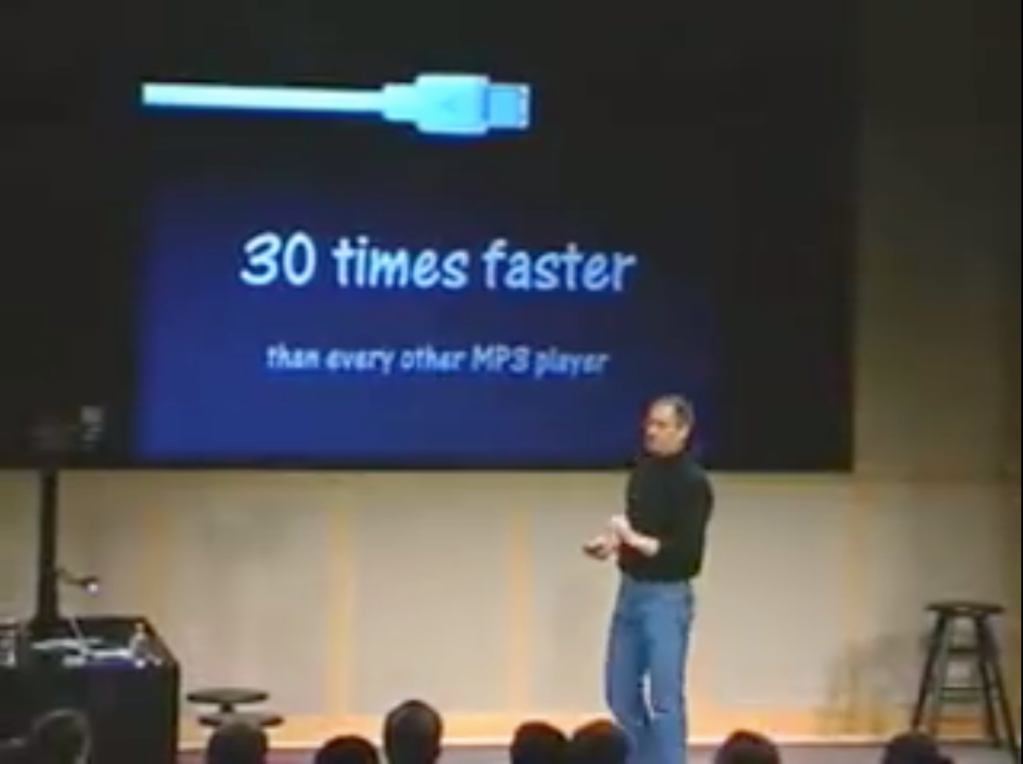
While I’d love for synchronisation to be automatic and happen at night without me knowing, in practise this doesn’t seem to work. I missed many buses as a teenager waiting for my iPod to sync and while I don’t take the bus as much these days, it’s somewhat reassuring to know things haven’t changed that much as I sit and wait for my Apple Watch to sync before I leave the house. The difference is my iPod would generally work first time.
You are most likely to catch the SARS-CoV-2 virus by spending a long time near an infected person in an enclosed space. Researchers in Guangzhou, China, examined how the virus was transmitted between 347 people with confirmed infections and the people they had contact with. They found that the risk of the infection being passed on at home or by repeated contact with the same person was approximately 10 times greater than the risk of passing it on in a hospital and 100 times greater than doing so on public transport (medRxiv, doi.org/dwgj).
Probably the most informative, accessible and actionable article I’ve read about minimising Coronavirus infection.
It’s all very well asking people to use “common sense”, but vast swathes of the population don’t know how viruses spread. Take for example the tradesperson who came to visit my house recently to fix a problem with a door. While he demonstrated plenty of common sense in being able to fix the problem (10 minutes to fix something that I had spent hours trying to fix and couldn’t), he also wore a face-mask so low down on his face that I could see his top lip. One motto I’ve taken with me throughout my life is that there is no such thing as “common sense”.
The rise of Zoom could be the headline for the 2020 technology scene. Zoom has replaced classrooms, board meetings, concerts, and even some low budget sporting events. What I find interesting about Zoom is how it took off for video communications while we had other services that were better in a lot of ways. I particularly want to look at FaceTime during COVID-19, and how despite having a nearly decade long existence and being built into every iOS and macOS device, it didn’t have its ‘Zoom’ moment, and why Zoom became the new default group video service. It doesn’t work on Windows, Android, and the web
There have long been rumours that Apple have FaceTime and iMessage running on Android in a bunker somewhere. The global health crisis and resulting lockdown would have been the perfect opportunity to put customers before the need to lock them into an ecosystem, and release them both for Android. If it’s not already a product that’s ready to go, then I can’t see a good reason not to build it now. I don’t buy an iPhone because it has FaceTime or iMessage, and I’m not sure who would. Messaging and video calling are now commoditised. WhatsApp, Houseparty and of course Zoom are ubiquitous and cross platform. In the end, it’s because of Apple’s stubbornness that their own customers are forced to use less secure, less privacy-aware battery-draining alternatives.
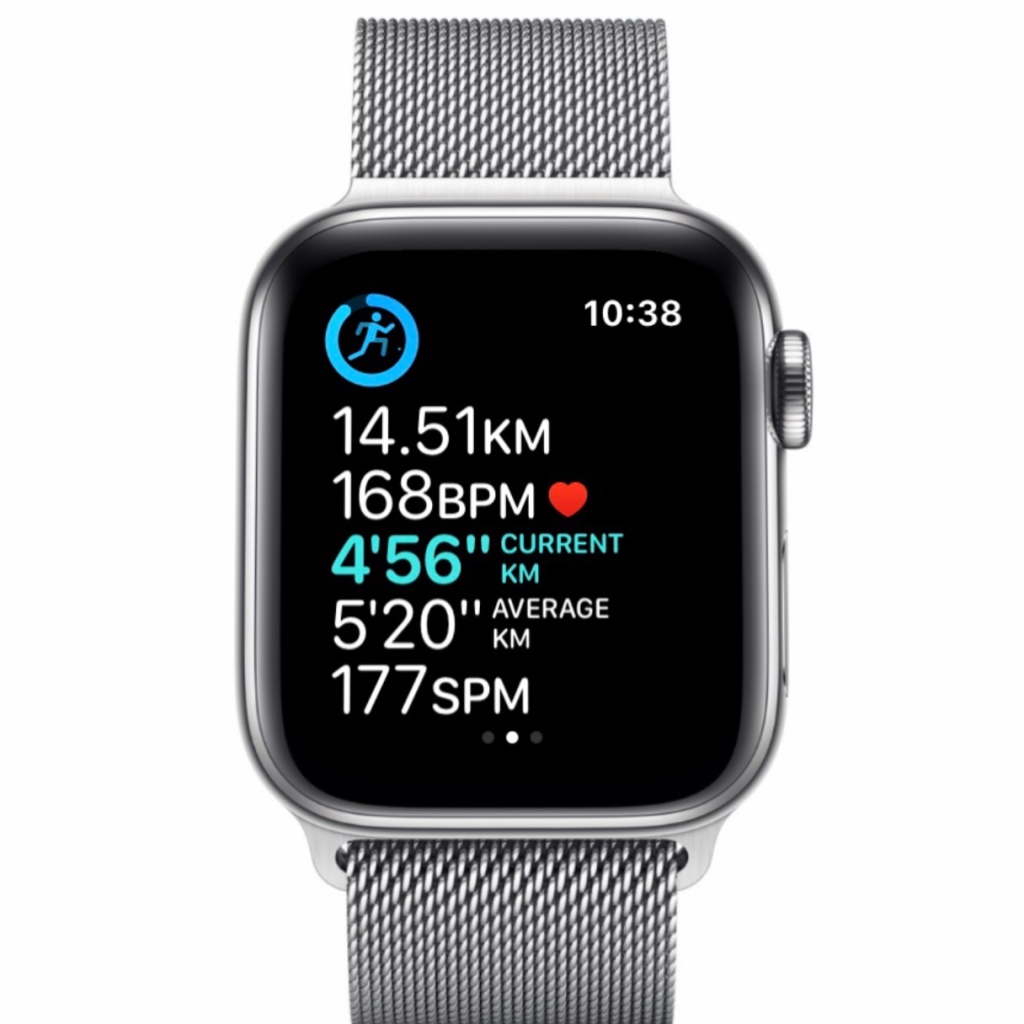
The Apple Watch allows the information displayed while running to be customised. You can either choose to show a single metric at a time and swipe through them app, or you can choose to see multiple metrics, of which you can choose up to 5. You don’t need to fill up all 5 slots however, and choosing fewer pieces of information means the metrics that are shown will be bigger and more legible. After using the Apple Watch for running for 5 years now, I’ve settled on the following metrics.
Distance So Far - While I don’t particularly care about time elapsed, knowing the elapsed distance allows me to know how far there is to go, and therefore how much energy I can afford to expend.
Current Heart Rate - The speed of the heart is a good indicator of how hard you’re working. I generally know if I’m above 185 then I’m putting in a lot of effort. A more relaxed run should be between 140 and 167. However if it’s particularly hot, or I’m coming down with something then my heart rate will be higher even if I’m not running at my usual pace - therefore I’ll want to take it easier than usual to avoid overly fatiguing my body.
Current Pace - I’ve always worked in kilometres when running, possibly because this is how the treadmills worked at the gym I belonged to when I first started out running. Knowing your current speed is of course the best way to make sure you’re on track to finish in the time you planned to.
Average Pace - This among with a bit of mental maths let’s me know my predicted finish time. I know whether I should speed up or hold off the gas slightly. One thing I wish Apple would add is the ability to see your predicted finish time instead, based on your average pace.
Average Cadence (Steps Per Minute) - Knowing my cadence is for me the best indicator of whether I’m running well. When I’m tired I am prone to running with bad technique and this usually coincides with a lower SPM. Making sure I keep above 175 reminds me to avoid stomping and focus on posture and arm movement, crucial factors when trying to avoid injury. I tend to get better times with a higher SPM too.
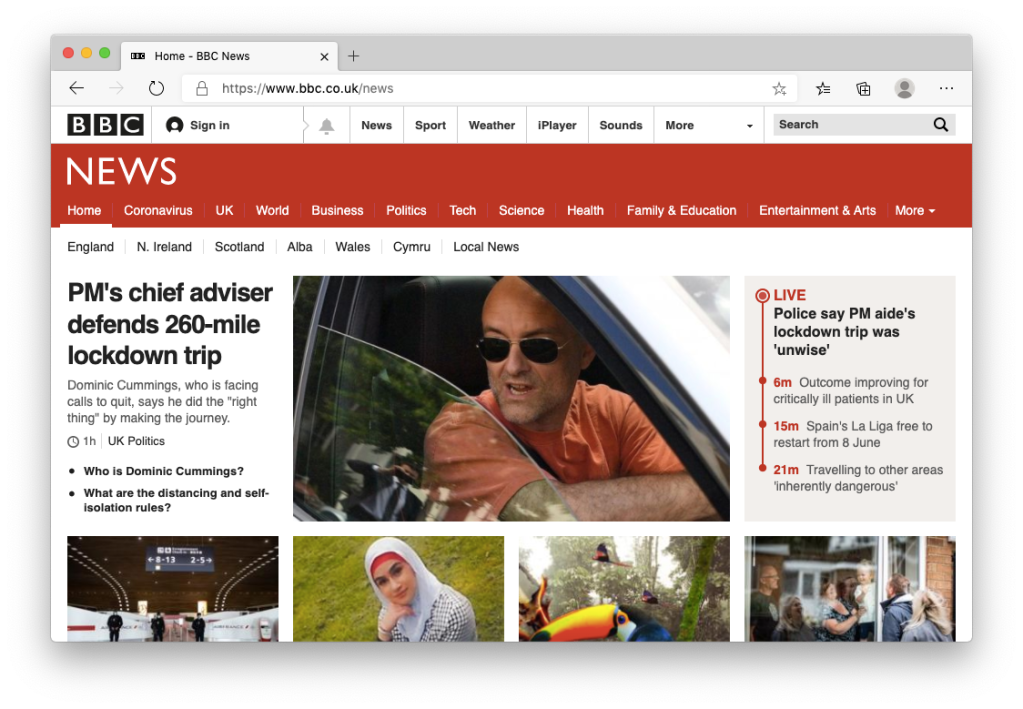
For a software company, Microsoft has an inconsistent track record when it comes to actually producing decent software. I can only imagine a lot of this may stem from internal politics and design by committee. Their failure to piece together a decent web browser over the last decade was starting to become down right embarrassing for a company which once held 95% of the browser marketshare. Back “in the day’, Internet Explorer was without question the best web browser out there. It wasn’t until Microsoft disbanded the IE team, Firefox came along, and later Google Chrome, that IE started to look like old-hat. The Trident engine was dragged kicking and screaming into the touchscreen age but was never able to keep up, in terms of both features and performance. Even a rebrand from from the 90’s inspired Internet Explorer to the play on words that is “Edge” (Edge was the name of a mode for Internet Explorer that was on the “bleeding edge” and would allowed the latest HTML features to be supported) couldn’t save it.
Now though Edge has been reborn using the same engine as Chrome, Blink. Gone is the legacy of Trident. Now we have what is essentially Google Chrome but without the annoying things Google likes to do. It’s strange, but it’s similar to Netscape and Mozilla. Netscape after being bought by AOL ended up being bloated out as a way to sell other products. Chrome feels this way these days. Privacy enhancing settings are buried deep in the settings so that no casual user would every find them. That and the browser really wants you to sign into your Google account and synchronise everything, even if you really don’t want to. Edge however is a breath for fresh air. On my 7 year old MacBook it flies by, and anecdotally seems faster than Safari. It supports Chrome plugins, and so is actually better than Safari in this respect. Safari took the regressive decision to require plugins install a full Mac application. On my even older Windows laptop, Edge manages to hide the hardware’s age with surprising grace. Microsoft make it easy to turn off 3rd party cookies and offer other privacy enhancing settings. The browser seems to be written for users and not for the benefit of its creator, a sure good sign. If you decide you don’t want to sign in, it’s not overly pushy about reminding you, even though I’m likely to actually trust Microsoft with my bookmarks and browsing history, and so will probably end up creating an account.
It feels odd seeing the word “Favourites” instead of “Bookmarks” in the menu bar. It takes me back to using the web as a teenager in the late 90s and using the last version of Internet Explorer for Mac on Mac OS X version 1 back in 2001.
At work, I’ve switched from Firefox to Edge. At home, I’m seriously considering switching from Safari to Edge. The only thing holding me back is the lack of synchronised reading list between Safari on my iPhone. When Apple eventually allow Edge to become the default browser on iOS too, I’ll give it more serious consideration.