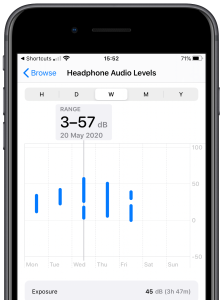
One of things like enjoy about iOS is the attention to detail and inclusion of features that few people would think to ask for, but that vastly improve our quality of life. One such thing is the ability to keep track of audio levels of your headphones over time. If you are using headphones that support this feature (no surprise - Apple and Beats both do) then you’ll see entries in the Health app when you play audio from your iPhone or Apple Watch (phone calls, and sounds played from an iPad or Mac are not included) you’ll see a log of the decibel level and clear advice on whether you’ve been playing your music too loud. I wish this feature had been available on iPods when they first came out. Since I was 23 I’ve had mild tinnitus, likely down to listening to music on the bus every day as I went to and from college. Now I can make sure my dB level never is never too high, and even try to keep it as low as possible (thanks to noise cancelling headphones).
Yet one more feature Apple have added to iOS that would make it difficult to switch to Android.
I’ve just discovered this, hidden away in Settings under “Sounds and Haptics” is a “Volume Limit” feature. I’d missed this. On the iPhone it’s under Music settings, not sound. Still, I’d recommend everyone set this to 60% to avoid hearing loss when streaming music from your Apple Watch. Update: the latest operating systems have moved the setting to a new “Headphone Safety” menu.
I’ve had the AirPods Pro for just over two months now, so I’m posting my thoughts in the hope that someone might find it useful to get a ‘normal’ person’s review. By ‘normal’, I mean someone isn’t a technology reviewer by profession, and so doesn’t receive the latest gadgets on a weekly basis, and as someone who had to shell out their own hard earned money for the privilege! (On a tangent, there are some great YouTube channels out there reviewing gadgets, but as soon as the creator goes ‘pro’ and suddenly has a £2,000 laptop or £1,200 phone every week, they loose part of what made them interesting, in my humblest of opinions).
AirPods Classic
I’ve been using AirPods since 2017 – boy does time fly, it seems like yesterday. I was immediately a fan. The main selling point for me was the fact there was no ‘on/off’ button, and you didn’t need to worry about leaving them switched on. I was forever leaving my other bluetooth headphones powered on and in my bag, and then getting frustrated when Siri didn’t work because it was listening to me through the headset and not my phone’s microphone. AirPods solved this brilliantly. The fact they were such an elegant package, and worked so seamlessly with the Apple Watch was also really cool. I swear running without my brick of an iPhone 8 Plus helps me get a better time. I still use my 2017 ‘original generation’ AirPods regularly, although the battery life is now a little under 2 hours when listening to music, or about 45 minutes if making a call. I can’t help but think the relatively quick degradation of AirPods’ battery compared to say my Plantronics BackBeat FIT (which I’ve had since 2015 and still manage 5 hours) is due to the fact they are constantly charging in the case when not in use. Apple released a feature for the iPhone in iOS 13 that stops your phone from charging all night, in order to lengthen the battery longevity. Using that same logic, being plugged in 90% of the time must take its toll on the AirPods’ battery. Needless to say, the convenience, small size and sheer utility meant I was excited about upgrading the the AirPods Pro.
Fit & Style
The biggest noticeable difference with the AirPods Pro is the shape and size. Gone is the long pole that hangs down form your ears. Objectively, the AirPods Pro probably look better than the classic style of AirPods, however the classic AirPods are so ubiquitous now that what once seemed ridiculous now comes across as quite fashionable. If anything, I can see the classic AirPods (which Apple continues to sell) being more popular with younger, more cash-strapped individuals, and consequently more fashionable. Due to their price, AirPods Pro are more likely to be seen on middle-aged IT workers, which may limit their fashion appeal. Despite that, they fit exceptionally well thanks to the three sizes of ear-tips that come in the box, and a built in software utility that helps you to determine if you have a good fit for noise isolation. They are slightly more fiddly to put away than the originals – I find the ear tips often fold inside-out when I remove them from my ears which can be annoying. On the whole though, a better fit means better sounding music. The classic AirPods had terrible noise isolation, so much so that I couldn’t use them on the train in the summer when the windows were open. As a sufferer of tinnitus since I was 23, I am very conscious of not increasing the sound levels on headphones above the EU recommend limit. With AirPods Pro’s more secure fit, I rarely need the volume above 75%.
Sound Quality
There’s a lot to be said for the line of thinking that goes: the more you pay for a pair of headphones, the better they sound. Just knowing you have a pair of premium, 24-bit, gold plated headphones can cause a placebo effect in of itself. The AirPods Pro however, do genuinely sound amazing. I’ve heard parts of songs I’d not noticed before: previously hidden rhythm guitar sections, or faint backing vocals. This is on songs I’ve been listening to for 20+ years. The AirPods Pro sound great. The biggest new feature, Active Noice Cancelation (ANC) is extremely good too. I’ve only ever had one pair of noise cancelling headphones before, the Plantronics BackBeat Focus – my office daily driver for Skype Calls. I’d say the AirPods Pro’s ANC is much better, especially considering their small size. I don’t travel often, but I did a short flight recently and was able to listen my AirPods Pro at about 40% volume with ANC switched on which was outstanding. When out and about, Transparency mode does an exceptional job at passing through the sounds of the world around – essentially for walking or running on country lanes against the traffic, as I do frequently. It’s an odd sensation, it seems to slightly increase the higher range meaning you notice the birds singing more than usual. After a while it’s easy to forget you are wearing the AirPods as the outside world sounds so natural, except if it’s windy. I’ve found that running or walking in a breeze does lead to an uncomfortable sensation of of what sounds like someone blowing directly into your ears. I’m surprised there was no way with all the technology onboard this sound could be offset, but I imagine that’s not an easy problem to solve. I hope Apple can improve this with a software update. It’s not a deal breaker, but it’s also not something I’ve ever noticed with other headphones before.
Controls
With the classic AirPods, you could double tap either side to invoke Siri, or trigger play/pause – depending on your configuration. With the new AirPods, double tapping is gone. Instead you need to squeeze the tip. This is more flexible as you can now either press once, twice or three times for play pause, skip forward and skip backward respectively. Pressing and holding switches between ANC and Transparency mode. Overall it’s a better system however I’ve noticed that I often pull the AirPod slightly out of my ear when using this control mechanism, which means I inadvertently loose the seal needed for decent noice cancellation. Siri is as inconsistent as ever. Unlike my OG AirPods, there’s no need to double-tap, I can just shout ‘Hey Siri’. Sometime Siri works like magic – ask it to turn on transparency mode, or lower the volume and 70% of the time it responds instantaneously saying ‘Okay, done’. The rest of the time however, it either takes too long that you doubt yourself – did I say the right thing? – and end up getting your phone out of your pocket, or it gets the wrong idea completely. There is something infuriating about requesting your favourite song, and having your phone proudly inform you it’s going to play a totally different song, from a genre you can’t stand, at maximum volume. Once thing I do notice is you need to say “Hey Siri’ pretty loud. Probably no louder than normal conversation, but louder than I’d like to when I’m in a public place. There’s something about asking your phone to remind you about buying toilet paper, or to send a text your significant other with a question asking them what they want for dinner that means I don’t want to scream it like Dom Joly.
A feature I have enjoyed is one hidden away under the notification settings for iMessage that allows messages to be announced and read by Siri when they arrive. This is genuinely cool, but I’m flummoxed as to why it’s only available on AirPods. Yes you can reply instantly without needed to say ‘Hey Siri’ which requires some clever work by Apple, but I’d be willing to forgo this if I could have this feature in my car too. It’s also of limited use because it doesn’t work with WhatsApp, which is the de facto SMS replacement in the UK.
Overall
I’m very impressed and would recommend them to anyone in the market for some premium headphones. Then again, for a staggering £250, I expect to be impressed. I understand there’s a lot of new technology in these, but I feel £199 would have been more reasonable for something with a 3-year lifespan. The main downside of the AirPods is their limited lifespan. For 2-3 year however, expect to enjoy great sounding music.
If you’re lucky enough to own a smartphone these days, as most people do, then you can most likely use it to replace your wallet. With Apple Pay and Google Pay, you can spend money without the need for cash for bank cards. Store Cards such as Tesco Clubcard can also be placed in your digital wallet. I even store my library card on my phone thanks to this app which lets you digitise any barcode based pass and place it in your Apple Wallet. I’m so used to this situation now, that I rarely go out with a wallet on my person. Once train ticket machines started taking contactless there really was no need. One less thing to lose, one less thing to remember.
However I ran into a slight hitch the other day when I ordered something online from for pickup in an Apple Store. I placed the order while walking through the shopping centre, knowing the item was in stock and would be ready for me to pick up within 30 minutes. I paid using Apple Pay on my phone, and an order ticket was placed into my digital wallet. About 10 minutes later a notification appeared on my phone saying it was ready for pickup. Excited, I took the escalator to the upper floor of the shopping mall and walked into the Apple Store, phone in hand, QR code ready on the screen. All went well until the Apple Store employee asked to see some identification. I had none. Why Would I? I use a digital wallet. In many respects, I am the prototypical Apple Customer, using minimal time from staff and making my purchase online using Apple Pay, from an iPhone. Yet they wouldn’t give me my new AirPods without seeing some form of identification.
While I understand that you can’t just handover expensive items without some kind of validation in place, I was surprised that Apple, of all companies, did not have a digital alternative in place. You could argue it’s not the role of Big Tech to be creating digital ID cards, and perhaps there are benefits to plastic-based identification. In the UK, thankfully there are no laws requiring citizens to carry identification (even when driving). That said, I’d love to see a solution that works in tandem with our existing systems and doesn’t exclude anyone who doesn’t own a smartphone, or wants to keep using plastic ID.
I thought I was just unlucky. It seemed that around 50% of the time I tried to exit a train station by inserting my ticket into the barrier, I’d receive a message asking me to seek assistance. Whether starting or finishing the journey in my local town of Reading or further afield, it seemed to happen very frequently, while everyone else seemed to strut through the barrier with no problem at all.
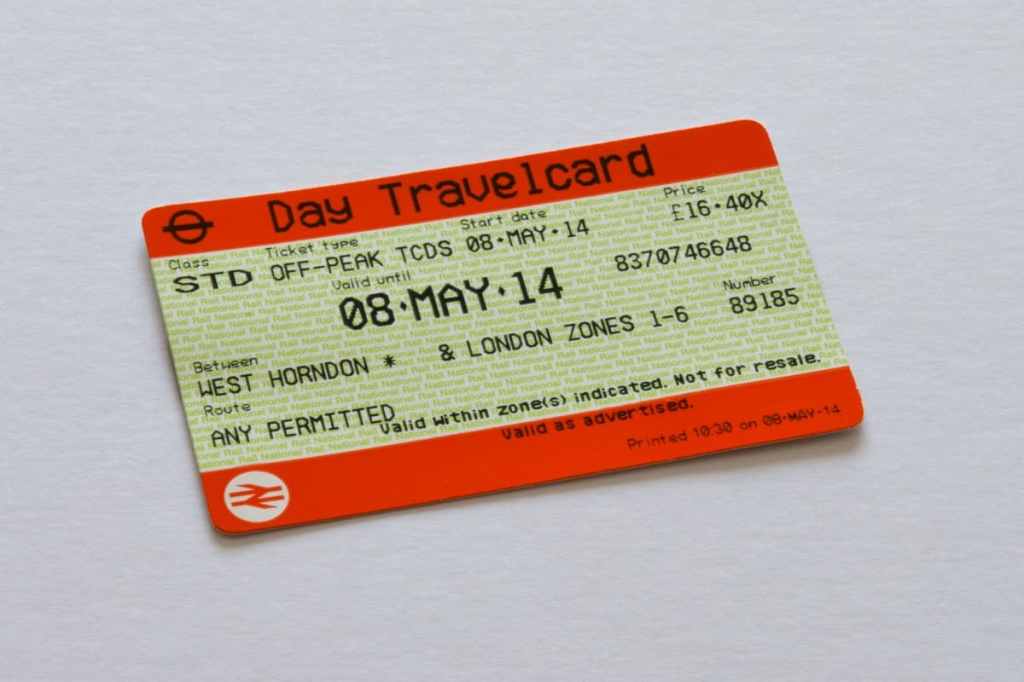
Today it finally clicked. I’ve been putting my train ticket in my pocket along with my AirPods. The charging case has the same satisfying click as you close it as a premium brand car does when shutting the door. It achieves this using magnets. My theory is that the magnets are interfering with the magnetic strip on the train ticket.
Paper train tickets probably aren’t long for this world anyway, but if you’re also experiencing the humiliation of having to speak to an actual human being on your commute, check your AirPods or other devices bearing magnets aren’t near your ticket.
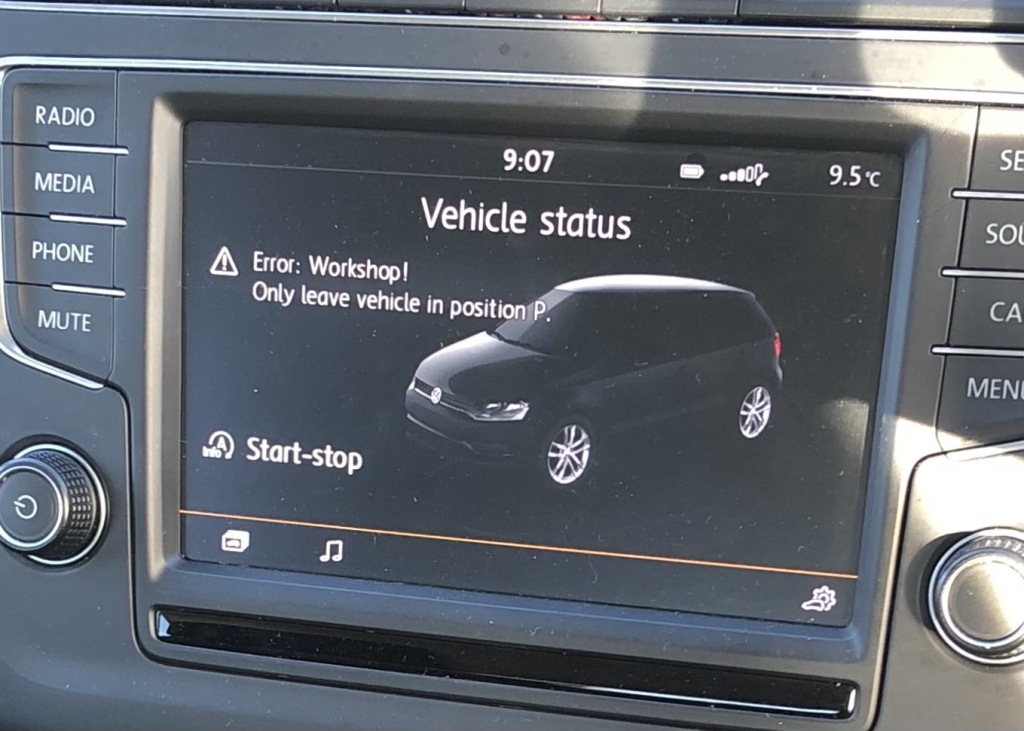
Within weeks of buying my car, a four-year old 2015 Volkswagen Polo 1.2 TSI SE 5d DSG, I discovered that I would occasionally be presented with an error message while driving stating “Error: Workshop! Only leave vehicle in position P.”
Although most of the time the audible tone and error message would disappear within five to ten seconds, it was disconcerting all the same, and a distraction while driving. For a long time I’ve been a “Do Not Disturb While Driving” convert, making use of iOS’s ability to silence notifications while I’m in the car. An alert that beeps and lights up your dashboard with a warning light is dangerous in its own right. If my car incorrectly thinks it’s in the workshop, or my gear shift should be somewhere else, that’s dangerous too.
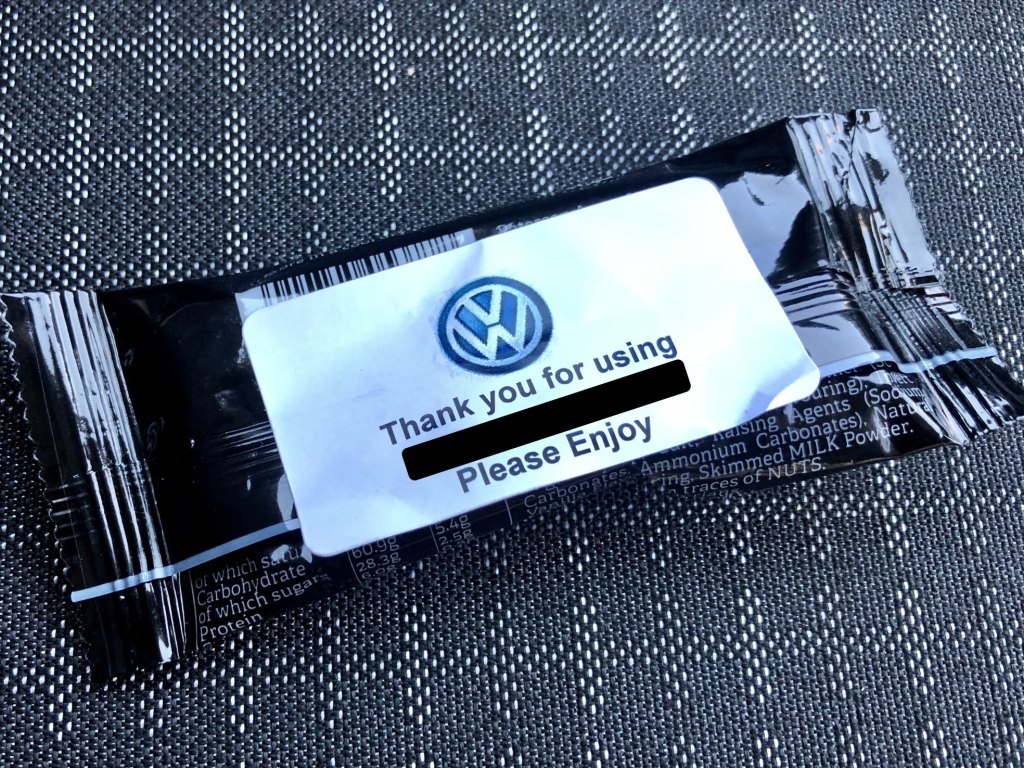
Like any good millennial, I googled the error message and quickly found forum posts from other VW owners who’d seen the same message. The consensus was that it was caused by a faulty gear selector, and since it’s a known manufacturing fault, the forum posts informed me VW have a service bulletin out and their technicians should be able to identify and rectify the problem swiftly. Knowing I had one year’s warranty included with my purchase, I booked my car into the VW garage I’d bought the car from, who after a couple of hours told me they couldn’t find anything wrong. They said to see if it happens again and bring it back if it did. They left me their standard complimentary biscuit and I was sent on my way. Surprised by this, but trusting Volkswagen (and enjoying my sugar fix), I went away hoping the error, which had only occurred two or three times, would go away by itself.
Skip forward a few months and the error had reoccurred, and I’d also seen estimates that the cost of a new gear selector could run into the thousands. The error had kept happening every few weeks. At the same time I’d noticed my coolant kept dropping down below it’s expected level: I had a slow leak in my cooling system. When I booked this in to get fixed under warranty, I asked them to look at the “workshop!” error too. Again, they found nothing, but did replace my cooling system, over a thousand pounds worth of repairs. Surprising for a car that was only four years old, I was grateful for the warranty and another complimentary biscuit.
A month or two later, the message starting appearing more frequently. I booked it in again, keen to get it resolved before my one year warranty expired (even though as a manufacturing fault, VW should really cover it anyway). This time I told the them there were many forum posts stating it was probably the gear selector, and showed them a video I’d taken of the error (this was difficult to do without breaking the law, but thankfully on at least one occasion the error remained until I was parked off the road and able to take a photo).
After a having the car for a few hours, I was the told the error could be fixed by a software update to my infotainment system, and that as software isn’t covered under warranty I’d have to pay a £110 diagnostic fee. Even after explaining the forum posts saying it’s the gear selector, they insisted it was a software problem. Not happy about having to pay to fix a fault, I insisted I shouldn’t have to pay. The garage wouldn’t budge, stating that the warranty only covers mechanical and electrical faults. Even when I explained that software is powered by electricity and so is technically electrical, they refused to waive the fee. In the end I had to phone Volkswagen HQ, and after expressing my frustration and disappointment in Volkswagen in no uncertain terms, they were able to convince the garage to let me off the fee as a “goodwill gesture”.
While doubtful the software update would resolve the problem, I gave the technicals who work for Volkswagen the benefit of the doubt and hoped they had finally fixed this annoying and dangerous error message. I also got a another biscuit.
About a week after this, the alert showed again. In fact, it now started showing up more frequently. Sometimes multiple times in one journey, and sometimes not disappearing until I stopped the car and restarted the engine. I phoned Volkswagen again, this time in full “angry consumer” mode and, exacerbated by their inability to fix an issue that a simple web search returns a solution for.
For the fourth time, I dropped my car off. They had preordered a replacement gear selector this time, and so I was quietly confident it would be fixed. About six hours after handing over my car, I received a phone call informing that they had indeed found it was the gear selector and there was even a technical bulletin about this very fault. Thankfully there was no difference of opinion with warranty cover. 10 months into my 12 month warranty, I was reassured.
This was two days ago. I’ve not seen the message since. My fingers are crossed that this will indeed fix it, but after this experience, in all honesty, I’m not holding my breath. I think they’ve given up with the biscuits now. It’s disappointing but probably better for my health considering how many times I’ve had to go back.
If you experience this error, don’t give up. Mine got worse over time, so get it fixed- no matter how many times they push you away with free confectionary. It’s the gear selector!
It’s been four years since the Apple Watch was released, and I’ve worn a variant of the miniature device pretty much every day of my life for most of this time. You see them everywhere now, but in 2015, wearing a smart watch was a novel idea. I’ve always been interested in gadgets, owning my first “smartwatch”, as Casio Databank, when I was in secondary school. I remember the sum of £40 seeming like a huge amount when I bought the Casio watch, and to be fair, for a 12 year old in 1997, it was. I would marvel with amazement that a Casio Databank watch could store and entire 50 names and phone numbers, schedule alarms way off into the future, and knew how many days were in each month (no need to manually skip over the date for shorter months). The idea of walking around with all that information and potential on my wrist was both mysterious and exciting. How exactly did such a small device know to sound an alarm at precisely the time I’d chosen? Where exactly did all those names and number go when I entered them? I studied computer science and got a job as a software developer and so now it’s much less of a mystery to me how it all works, but my curiosity for these kind of smart devices never went away.
A UNIX Box on every wrist
Maybe it’s just because I’m now in my early thirties and relatively old, but it seems to me quite fantastical that the smart watches, especially the Apple Watch, are now mainstream. That it’s actually considered normal for someone to walk around with an always-on, UNIX-based computer strapped to their wrist - a computer far more powerful than any of the computers I grew up with back in the late nineties and early 2000s.
I find this especially interesting because these days, other consumer hardwire such as smartphones and laptops (or tablets) just aren’t that interesting. Phones don’t really do anything new anymore. Nicer screens, easier ways to log in, slightly better cameras - incremental updates that make the experience a little bit nicer. Smart watches on the other hand are vastly more compelling from a geek’s point of view.
First, there is room for a variety of styles: some of the designs released by LG and Fossil look genuinely beautiful, though Apple Watch is in a league of its own on that front.
Secondly, there is plenty of potential for new sensor input on the wrist. At the moment we have heart rate, accelerometer, and now ECG sensors with the latest Apple Watch, and there is so much more potential for a device that’s always on, and always being worn. Will the smart watch eventually displace the smartphone, just as the wrist watch displaced the pocket watch? I don’t think it will be as clear cut but I think they will eventually surpass mobile phone usage for many tasks. I certainly find that I need my phone less when wearing a smart watch - I just prefer to use it for certain tasks, mainly idling time reading the news or Facebook, or using the camera - the former is something I want to cut down on anyway.
Despite my initial skepticism, I’m now hooked on the Apple Watch. My home is strangely devoid of clocks. Apart from various computing devices, and my microwave, I have no clocks that I can easily glance at (partly due to finding ticking annoying!). Apart from making daylight saving days less of an event, it does mean I rely on a watch or smartphone to keep me on track during the morning. Outside of just telling the time, I’ve found the Apple Watch useful for using Siri to do things like set timers and reminders. This means I have no need for a dedicated smart assistant like Amazon Echo, a smart watch beats a stationary cylinder in many respects because it’s always with me. It’s now second nature to dictate reminders into my wrist. Those reminders can always be location based (“At work”, “when I leave my car” etc.), unlike an Echo or equivalent. Admittedly, I’m not going to listen to music on the watch’s speaker, and the inability to easily control Sonos via the watch is disappointing (there are 3rd party apps, but they’re pretty clunky). Apart from this, I do occasionally reply to text messages and emails I receive while at home, more often though I’ll initiate a text via the watch using Siri to dictate. Initially I thought I’d use the remote control ability for Apple TV more than I do, partly because there’s no volume control for the TV on the watch, nor the ability to send Siri input to the TV (for example to search for something), and so I end up usually needing the Apple TV remote anyway.
Wearing a fitness tracker like the Apple Watch has also helped motivate me to keep active. I was an occasional runner before I owned an Apple Watch, but since, I’ve really progressed in part due to the ability to easily measure my pace and exertion using the GPS and heart rate sensor. The built in activity app is pretty minimal, and so I find exporting to Strava useful to get some more useful insights into my progress. The ability to go for a run with just a watch and some headphones, and still have access to music, podcasts and statistics while I run is truly amazing.
The downside of wearing a computer all the time is that it can be difficult to switch off. Whether it’s BBC News or Strava, companies and apps are desperate for our attention, and the watch can make it easier for them to grab it from us. I’ll address this in a future post, but I feel the Apple Watch’s fitness goals and achievements are focused on gaining “streaks” and never missing a day. I’d love to see Apple admit that once in a while, disconnecting is also good for your health and reward users for doing so.
What would the world be like without standards? We take for granted that all of our electrical appliances fit into the same plug sockets, not giving it a second thought. We assume that that tires purchased from any manufacturer will fit our cars, given the correct wheel size and width. Who would even doubt that a lightbulb will screw into its socket no matter where it was bought from or who fitted the light socket. Even the fact that an email can be sent using an Apple iPhone, from a Yahoo email service only to be received by a computer on the other side of the world running compatible email software is pretty amazing when you think about it. In fact, anyone can create their own email service by just registering their own domain and having a computer that is always switched on with an Internet connection. Whether it be the width of railway tracks or the audio encoding on a CD, interoperable standards were key to our way of life in much of the 20th and 21st century. TCP/IP and HTTP famously made the World Wide Web possible, while other Internet standards such as IRC, NNTP and FTP gave us realtime chat, debates and discussions and two-way files-transfers.
What do these technologies have in common though, apart from their interoperability?
They were invented in the distant past.
If I take the apps and services I now use regularly that were invented within the past 10 years, I struggle to think of one that supports interoperability. SMS was replaced with Whatsapp, Facebook Messenger or iMessage. Two of which are owned by the same company, all of which are designed to keep users locked into vendor ecosystems. Slack, which raised billions of dollars in 2015 is essentially 1990’s IRC with support for logins and cute emoji, and of course it’s closed. Twitter, the debate forum of our time, tightly controls which 3rd party clients can access the service in any meaningful volume, and decides who and what is deemed appropriate content.
This problem highlighted itself further recently when I realised that if I wanted to access a music streaming service on both my Apple Watch and my Amazon Echo, I’d have to pay for two separate streaming services. Apple do not allow users to play music from 3rd parties on the watch, only their streaming service Apple Music. Amazon does not support Apple Music however. How ridiculous is this? Can you imagine Sony releasing a CD player in 1980 that only played songs from artists on the Sony record label?
My worry is that email is next. Google is pushing users towards its Gmail app, and withdraws features such as Push email from users who choose to use a different app. We are lucky that at the low-level, technical details such as how to implement HDR are still agreed as standards. But for how long? What we need is government regulation or oversight to ensure that technology companies compete on the merits of their products, rather than the vendor lock-in they manufacture. Interoperability didn’t stifle innovation or harm profits in the previous century, and it won’t in this one.
When Apple first announced the AirPods there was a lot of hyperbole in the media about them being Apple’s next big ‘wearable’ device. For a company that famously said that speeds an feeds did not matter, there was a of emphasis on the fact these headphones contained a “W1” chip that could do all sorts of smarts other headphones could not. I use Bluetooth headphones extensively: at work I have a pair of over-the-ear noice cancelling headphones that double up as a headset for making calls. They are excellent at both cancelling the noise around me so I can’t hear it when listening to music, and also at removing external noise so other people can’t hear me when I’m phoning them. I also use a different pair for running - they are average sound quality, but they are sweat proof and let in external noise making them safe for road-running. Both these headsets have an onboard chip: The big ones I use in the office are able to tell me if I start speaking and my microphone is muted, alleviating the frustration of sharing your greatest idea on a conference call and wondering why nobody even acknowledged you. The sports pair aren’t as sophisticated but can tell me how much battery life I have left, telling me there is some smarts going on inside the headphones. So having ‘smarts’ inside a pair of headphones is nothing new. I’m sure they could come up with a brand name for their silicone chips to, but to me, the W1 in the AirPods is meaningless in of itself. So what makes the AirPods better than any other headphones? It’s the integration between hardware and software - Apple’s usual strength. In this case not only the integration between hardware and software on the AirPods themselves, but also between the AirPods’ software and the iOS device they’re paired to. My biggest frustration with existing Bluetooth headphones is that they stay connected to my phone when I’m not wearing them. How many times have I tried to use Siri, and realised after 3 attempts that it’s not working because I’ve left my Bluetooth headphones on and they’re still connected but in my gym bag. AirPods solve this beautifully. The other big problem with Bluetooth that AirPods solve is pairing. Recent Bluetooth headphones are not difficult to pair: there’s no passcode (it was always 0000 anyway so it seemed pointless) it’s just a case of putting the headset into ‘pair mode’ and then choosing it from the Bluetooth menu. Unless you’ve paired it with another device since you last used it with the one you’re trying to use it with now, in which case you need to un-pair and re-pair. Usually you need to see a few error message before you realise this is the case. This of course means if you want to use them with that other device again you’ll need to repeat the process. Not a big hardship, but a small piece of friction that meant I rarely bothered to use my headphones with other devices. AirPods make switching devices as simple as selecting ‘Marc’s AirPods’ from a menu. No pairing, no need to remember about which device I used last. It’s not quite as magic as I had hoped for - it doesn’t just know I’m using an iPad now and so switch automatically, but hey you can’ have everything. So overall I am impressed with my third set of Bluetooth headphones. The AirPods won’t replace my headset at work for calls, because I need noise cancelling at work. I will use them for running, walking and working out however. They are especially good around the house while doing chores etc. Their frictionless nature means I’ll use them whenever I would have just use the phone’s external speaker before. The quality of phone calls is surprisingly low, making me think Apple’s switching to a different Bluetooth profile or something. Hopefully this will be fixed in a firmware update. Some other random thoughts: - Siri is pretty unreliable, it’s generally not worth the hassle. In the rare case that it understands what I meant, the phone will often respond by displaying an answer on the screen, defeating the point of using the headset. - They seem very secure in the ears. - They look silly, but so did white earbuds when they first came out. - i sometimes feel a bit self-conscious when wearing them, especially if I’m on a train wearing an Apple Watch and reading on an iPad. I feel like I’m in an Apple advertisement (though I’m not good looking enough to actually be in one). - It seems weird that if I go for a run with my Apple Watch, and my iPhone, and use Siri on the AirPods, I can’t start a workout using AirPods because they’re connected to the phone. This says more about Siri’s inconsistencies than the AirPods. - Opening the case near an iPhone causes a menu to show on the phone with details about the AirPods’ battery life. It doesn’t do this on iPads and Macs, presumably because it needs NFC, which they don’t have, but I’m not sure.
The iPad Pro is now available, with its much larger screen. Admittedly I haven’t had a chance to try one yet, and having only purchased a new iPad last year, I probably wouldn’t consider such a purchase so soon anyway. But as someone who does try and do real work on an iPad, (I enjoy stepping away from my desk from time to time to focus in on something, and the iPad is perfect for this.), I am not frustrated by the iPad’s lack of screen real estate (though I’ve no doubt more is better, it usually is) but by its limited software.
This ‘limited software’ is not always the fault of Apple, developers purposely try and simplify their iPad releases in an effort to route out the bloat that dogs their desktop equivalents. This is mostly a good thing, as someone who runs complex software projects for a living, I am always a proponent of the KISS philosophy (Keep It Simple, Stupid). However, there haven been numerous times when I’ve had to walk back to my desk and grab my laptop because something just isn’t possible on an iPad.
Take Microsoft Excel. The desktop version may be a horrible, bloated and full of legacy code (it seems to have its own rules on when to wipe your clipboard unexpectedly), but to its credit, it does make a lot of complex, routine tasks very quick and easy. If I have a list of stuff and I want to remove duplicates, it’s one click. If I have a CSV file (or values separated by another delimiter), converting this to columns is only 2 or 3 clicks. None of this functionality exists in the iPad version. Microsoft OneNote on the iPad doesn’t have Outlook integration (the ability to pull in meeting details), and while Microsoft have recently added support for audio recording to OneNote, it’s modal - meaning I can’t take notes while I am recording - which is one of my favourite features of the desktop version, because it synchronises your note with the timestamp of the audio recording, meaning you can quickly seek to important parts of a meeting when you’re trying to remember what was going on. Again, back to my laptop.
I don’t want to pick on Microsoft, they make some of the highest quality iPad software out there, and I know all too well that quality, time to market and the number of features are all opposing interests, and Microsoft has made the decision to go for quality over features. There’s nothing wrong with that, in fact it’s the best decision they could have made in my view, but it doesn’t change the fact that the iPad just can’t do these seemingly simple things a laptop can. Adobe and Apple both have examples too. I was sent a wireframe that had been hand-drawn and had been scanned and emailed directly from a networked printer/scanner. I wanted to annotate the resulting PDF. On the Mac I would use Preview, on Windows I’d use Adobe’s Reader application. Preview on iOS doesn’t support annotation, so I used the Adobe Reader app for iOS. It did support annotation, but due to the way the image had been scanned in, it was upside down. Surprisingly, there was no way to rotate the PDF. Back to my laptop, again. Yes with a little help from Google, I’m sure I could find an app that lets me rotate a PDF, but will it also support all the other things the Adobe app does? The bottom line is, it’s not feasible to go on an app hunt every time one of the simplified versions of an app comes up short. When Steve Jobs introduced the iPhone in 2007 he made a big deal out of the fact other smartphones only showed you the ‘baby web’ and the iPhone didn’t - we have the same situation on iOS now, we get baby applications.
Then there is the inability to have more than one document open at once. I can now have Twitter and Pages open at the same time, but not two Pages documents. Even just a way to quickly switch between documents would be nice. At the moment I have to close the first document, find the other one (navigate a long list of files and folders), load it (and wait while it loads), and then repeat the process when I want to return to the original document. Writing one document when referring to another is not an uncommon computing task, and yes there are workarounds like exporting one of them as a PDF and opening it in a separate application, but this isn’t very clean, and what if I want to edit both documents?
I don’t want to take way from the iPad what is is great at; web browsing, writing this blog post, simple spreadsheets, reading books, playing games, managing email, task lists - the list goes on. While I’m sure the iPad Pro is a beautiful device, and if money was no object Id buy one today, I don’t think having a bigger screen is going to turn it into a laptop replacement. I would love to be able to work solely on an iPad, but until the software improves, I can’t see this happening, no matter how big the screen is.
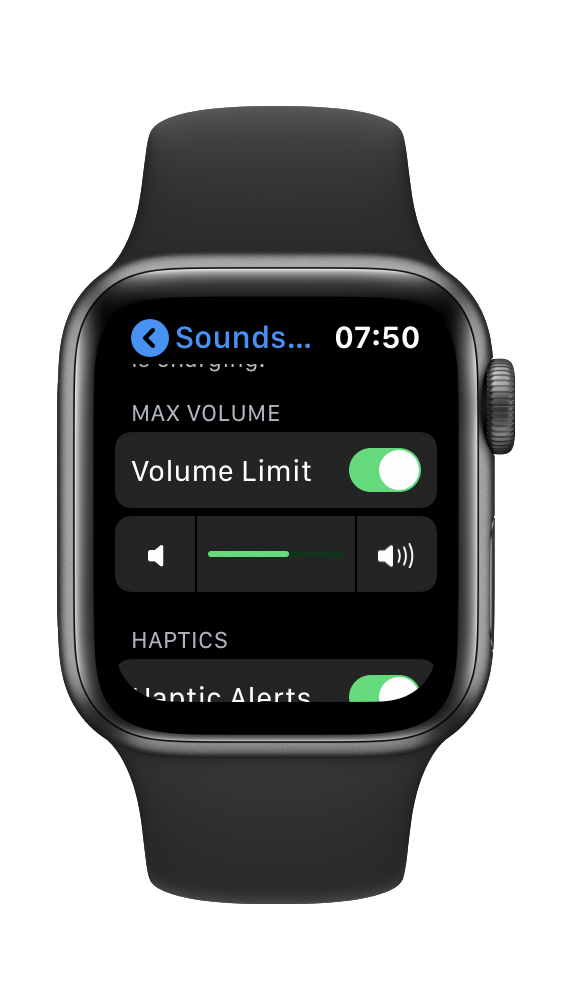 I’ve just discovered this, hidden away in Settings under “Sounds and Haptics” is a “Volume Limit” feature. I’d missed this. On the iPhone it’s under Music settings, not sound. Still, I’d recommend everyone set this to 60% to avoid hearing loss when streaming music from your Apple Watch. Update: the latest operating systems have moved the setting to a new “