Back at the end of February I decided I needed to get a pair of over the ear headphones for the office. (Little did I know I’d have only about another 3 weeks left in the office until my recent return at the end of August.)
I originally had my sights (sounds?) set on the Sony WH-1000XM3. These are often considered best noise cancelling headphones on the market - and noise cancellation is what I was after. Office life can be full of interesting distractions, but nothing beats putting on some Radiohead and getting lost in your work for a couple of hours. My AirPods were great, but over-the-ear headphones are even better for really blocking the outside world and being able to focus.
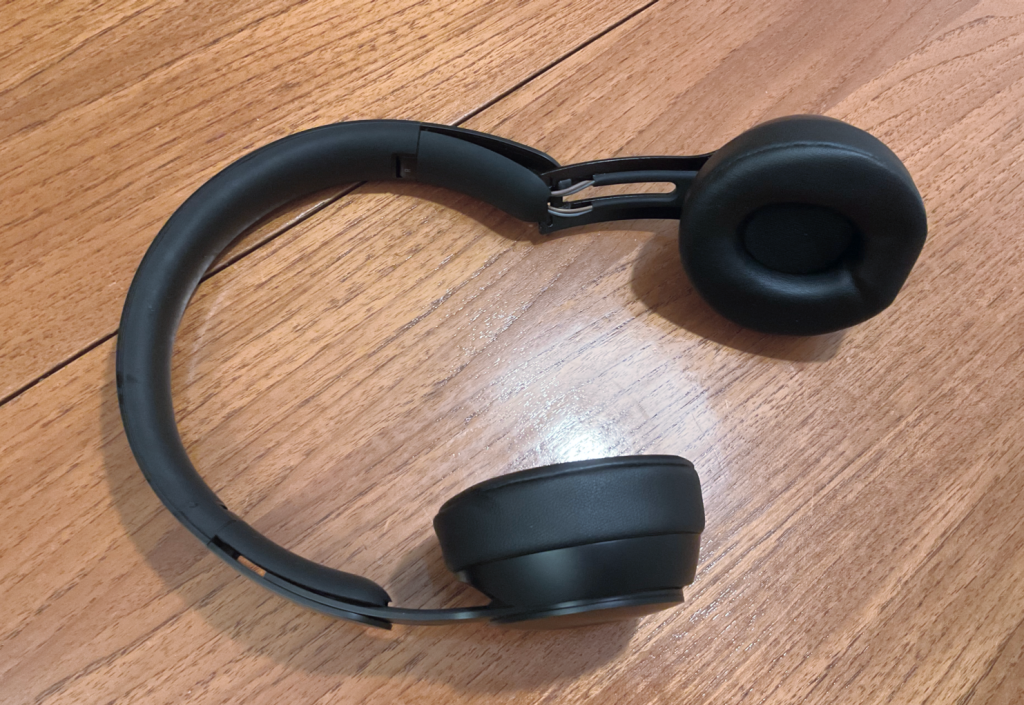
Moments before hitting the trigger on the buy button, I remembered that Apple owns Beats, and that means that newer Beats headphones have the same H1 chip founds in the AirPods Pro - this in turn means seamless pairing with all the Apple devices I own, the ability for new messages to be read out automatically, and handsfree use of ‘Hey Siri’. At the last moment, I changed my mind and went for the Beats Solo Pro instead. At the same price, most reviews has reassured me that the sound was actually pretty decent, unlike previous generations of Beats (which I ended up returning because of this).
First impressions were great. The sound is indeed very good - not as good as the AirPods Pro, but still extremely enjoyable and seemingly optimised more for music than for podcasts or phone calls. Comfort-wise, they can be a bit hot and because unlike the Sony WH-1000XM3 they are on ear not over ear, but are fine for wearing for a couple of hours at a time, but certainly not all day.
So far, so good. Until I took them outside during my government mandated daily lockdown exercise. It turns out that both transparency and noise cancellation modes are pretty much unusable outside due to the fact that even the smallest, most minor breeze will be picked up by the onboard microphone and amplified right into your ears. Imagine someone blowing into a microphone and that’s what it sounds like. While this obviously won’t be a problem in the office, I can imagine a lot of people buying these for use outside - and they will likely be disappointed.
So while the H1 chip and integration with all of my Apple devices is excellent, the sound really punches, they look decent and are OK-ish on the comfort side - this one issue makes me wish I’d gone for the Sonys instead.
This a just a brief review to highlight the issue of wind effecting the Beats Solo Pro. For a more rounded review, I highly recommend this YouTube video.
Update: August 2023
After nearly three years (1,051 days to be exact) the headband snapped, and the Beats went in the bin. A few months later I replaced them with the Sony WH-1000XM5s. The sound quality is remarkably better and make the beats sound awful with the benefit of hindsight.
In a strange move for a Conservative government, it was announced recently that workers will actively be encouraged to return to the office in order to help businesses such as coffee shops, who rely on the custom of office workers. I use the word ‘strange’ because asking the population to behave in a certain way in order to support part of the economy seems like the beginning of a planned economy – the antithesis of free market conservatism - proving it’s not the panacea they often claim. In addition, many local independent shops have actually enjoyed a boost due to people staying at home in places that would usually be deserted during the day.
I recently broke my streak of 115 days of home working and returned to the office for the first time since March. I eagerly anticipated not having to use Microsoft Teams video calls and seeing my colleagues for the first time in person. No more would I have to endure delay, frozen screens, and overhearing partners taking meetings with their own colleagues. I was granted the pleasure of instant conversation without the awkward fumbling of headsets and the repeated ‘Can you hear me now?’ punctuating every call. I thoroughly enjoyed casual chat and felt my wellbeing improve instantly. With a limited number of people allowed in the office, it felt different to the warm buzz that would usually emanate beneath rows of monitors, but it was still hugely valuable.
Working from home has it benefits too. The lack of a long commute meant more exercise, extra pocket money and less road rage. I was able to focus more on completing tasks and I no longer had the regular 10 minute coffee and chat break in the kitchen. You could argue that in knowledge work, taking your mind off the task at hand can actually reap massive rewards, so maybe having a balance between the productivity of home work and the creative head space of office work is probably the way forward.
Whilst for many the future of work will be remote, I believe there will always be a need for a common shared office space. Whether it be a the feeling of awe we get when entering a well designed, bustling office, the motivational speech given by a company leader, the wearing of corporate ID lanyards, or just having lunch with colleagues – these are quasi-religious behaviours that are deep-seated in human history and enforce a sense of ‘togetherness’ that is essential for productive teamwork. That said, some peace and quiet is also important – so my ideal split would be something like 3 days a week at home, and 2 days in the office.
Maybe the government doesn’t need to encourage the complete return to office work quite so earnestly. Maybe those that can remotely work should be given a choice to find the balance that works best for them.
A change discovered in iOS 14 and macOS 11 betas this week suggests that Apple is hoping to quietly hijack and redirect users into its paid Apple News+ service
From various comments I’ve heard of Apple News+, one of the most frustrating aspects of the service is that even after subscribing, when you click a link on the web that’s behind a paywall, but is from a publisher you have access to as part of your Apple News+ subscription, you are still locked out from reading it. The only way to read the article that you’ve paid to access is to search for it within the Apple News app. I’m pretty sure Apple are simply addressing this flaw in the design and common user complaint. If you don’t pay for Apple News, and haven’t started a free trial, this won’t effect you.
So no grand plan, no ‘power move’, and certainly no attempt to ‘hijack’.
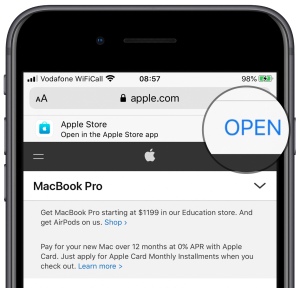
That said, I think iOS should have an option to stop all web (http) links launching apps altogether - not just Apple News. I’ve uninstalled apps such as The Guardian because I was fed up of web links opening in the app. Apple already has an elegant way to show you that an app you have installed can be used instead of the web - “Smart App Banners”. One extra tap isn’t really a big deal and would’ve caused less uproar in the case of Apple News+.
Smart App Banners prompt users to install or open a website’s app, and once the app is launched, users are shown the same context within the app.
Another day, another news story about Apple’s App Store policies. This time, it is Microsoft complaining about the fact Apple’s rules mean Xbox Game Pass cannot be made be available on the iPhone or iPad.
While I can see the argument that Xbox Game Pass is simply Netflix for games, as I see it, the key difference is that games are software and videos are content. If Apple allow software to be streamed in the store, could this, in theory, open the floodgates to other developers whose motivations might not be as sincere as Microsoft’s?
Apple already has a struggle on its hands to encourage big application makers to build high quality, native applications for its platforms. Many apps that need a presence on both Android and iOS use some kind of intermediate framework that makes the app cheaper to develop, as there’s only one codebase with minimal changes for each operating system. This usually comes at the expense of usability and inability to take advantage of platform specific features. You can usually tell when this is the case, as the resulting apps often won’t feel quite right - if you’re looking for an example, then maybe try your electricity company’s app (for some reason, utility companies seem to be ripe for this kind of cheaply made app).
Imagine if instead of building a cross platform app using one of these frameworks, there was an even cheaper option - build an app that runs in the cloud. It’s the ultimate option for companies that just need an app with the most minimal expenditure. The user experience would be terrible - but many companies don’t care. Your £1,000+ iPhone would be acting as a thin client.
So while I think streaming makes sense for games (I can’t wait to play Flight Simulator 2020 and streaming it over Xbox Game Pass might be the only way I can, due to its stringent hardware requirements) - I can kind of understand Apple’s reluctance to allow software streaming, and making an exception for games seems kind of arbitrary. If Microsoft can stream games, why shouldn’t Adobe be allowed to stream their Creative Cloud applications?
Will the future of software be in the cloud, a future where we all use low-specification thin clients? We’re not there yet, and Apple’s investment in low powered CPU and GPU technologies, coupled with the fact they make their money selling premium hardware, tells me that they see a future where our computing power is in our pockets, not the cloud.
This is Cambridge University, though, in Silicon Fen, where there has been a department of computer science since 1937 (when it was called the Mathematical Laboratory), home of computing pioneer Alan Turing, home of one of the world’s earliest digital computers (EDSAC in 1949). It saw email evolve from a system called Phoenix in the early days to Hermes running on a Unix-based system from 1994.
It’s sad that the inevitable commoditisation of Internet services has to lead to this cost cutting exercise - a true piece of Internet history will be switched off. The trend towards centralisation of the Internet continues…
If you’re paying for something with your data, then that makes data a currency.
So it seems New Zealand is at it again when it comes to leadership on the world stage. The government has released an ‘algorithm charter’ that aims to tackle the lack of transparency and potential bias in automated systems.
This is a long time coming, and other countries need to pay attention.
Whilst the document is a great start, its language is somewhat vague and aspirational - perhaps intentionally so, given it is early days for this kind of scheme.
As AI and automated systems become evermore present in our daily lives, with the potential to decide your next job or even the next US president - I don’t think it’s unreasonable to expect companies to be more transparent about how their AI works.
Just as we expect companies to file accounts and keep records, we should ask companies to answer a few basic questions about how their algorithms work. This will give consumers confidence that they’re not subject to unfair bias when decisions that affect them are made by AI.
To make AI more transparent, I’d ask companies for:
A high level description of the type of algorithms in use - most machine learning algorithms are not written from scratch - so just tell us for example whether the algorithm is a Logistic Regression or a Transformer Network etc.
The source of the data used to train the model - did the company collect it themselves, if so, where from? Or did they buy it from a 3rd party, if so, who, and where did they get it from?
The features used to train the model - knowing for example that ‘sex’ or ‘age’ are fed into the model would tell us where to look for potential bias.
The methods, and datasets used to validate their model’s effectiveness - this is critical - a company without a good validation strategy is obviously going to have unconscious bias in their systems.
I’ve picked the questions carefully as I think companies have a right to maintain their trade secrets. The data itself can remain secret, as should the various parameters and other specifics about the algorithm.
While I’m not expecting the average consumer to understand the different between machine learning algorithms and the consequences of different testing strategies, having this information in the public domain would enable journalists and the tech community to better hold big tech companies to account.
The privacy invasion is the result of the apps repeatedly reading any text that happens to reside in clipboards, which computers and other devices use to store data that has been cut or copied from things like password managers and email programs
I love that Apple have started to notify users when an app reads the clipboard without the user explicitly pressing ‘Paste’, however I worry that adding yet more warnings and notifications will result in users becoming fatigued and eventually ignoring them.
Instead, why not allow apps that need to store sensitive data on the clipboard (LastPass, for example) to set a specific data type indicating that the information should be classed as sensitive data - much like they can set the data type to text or image at the moment. In order to paste this “secure object”, users would have to press the system ‘Paste’ button - any app just reading the clipboard by itself would just see it as empty.
This of course wouldn’t solve for cases where data is not known to be sensitive - how many people store their passwords as a simple note instead of in a password manager, for example? Still, fewer notifications and stopping any app from reading passwords from the clipboard might be the right balance.
Ofcom also found most people who use an address provided by their broadband company are former BT customers. BT says if customers want to switch provider but keep hold of their old BT email address they’re charged £7.50 per month to be able to access and use their account like they used to, including accessing it using an app.
Reading beyond the BBC headline, it turns out that BT are in fact allowing former customers to access their old email account for free, but this only works using a web browser, presumably this is because it’s funded by advertisements - I can’t see any other reason for this limitation. It is only for continued access via POP/IMAP that BT demand payment for.
Even so, £7.50 a month seems extortionate considering you can get a full Microsoft Exchange account for ~£4.50 a month including VAT.
This kind of exploitative pricing is in poor taste, especially considering that in many cases - the type of customer who still uses their ISP for email is most likely still running Outlook Express - as it was configured in 2007 - and so any change will be more confusing and disorientating than it would for someone who knows how to setup a Gmail account and configure email forwarding (BT do offer forwarding, but I’ve no idea if this is covered by the free option).
We solved this problem with mobile operators by having rules that mean that as a consumer, you have the right to take your phone number with you when you switch to another operator. Email is unfortunately not regulated in the same way, and in fact its architecture makes it impossible for an email address with the domain “btinternet.com” to be be routed to a server owned by another ISP. Instead, I’d like to see the option to forward emails for free to another email address for a set period of time (say 2 years). If major ISPs and popular webmail providers could somehow automate this process, even better.
Though email is arguably less relevant today than it was 15 years ago, I would still strongly advocate buying your own domain name (around £15 a year) and then setting it up either to forward to a free email account, or even better, paying for proper email with the domain (around £2/month with FastHosts). For those who fancy a technical challenge, for around £4/month you can setup a lightweight Debian VM on somewhere like Linode and run your own mail server - this gives you the benefit of being able to setup unlimited email addressed with your domain - though it’s not for the fainthearted.
I’ve not yet paid for a Hey.com subscription as I’m a strong believer in owning your own domain name for email, but I have to admit I that find their style of business a welcome change to the norm and reminiscent of what I can only imagine the counter-culture inspired Apple must have been like in the mid 1980s.
Enter GMass, a plugin for Gmail that adds spy-pixel tracking, amongst a grab bag of other stuff. They hadn’t been on our original list of 50+ services we name’n’shame, but thanks to a new blog post where they brag about defeating protections that recipients might take to defend themselves, they came onto our radar.
It turns out the makers of this Gmail plugin have used the unimaginative steps of using URLs with no obvious parameters (we called them “friendly URLs” in 2006), encryption of those parameters (not so friendly), and setting up a CNAME record so senders can appear to be hosting the tracking images on their own server, all to try and avoid being tracked by Hey.com (the irony, right?).
Whatever your take on tracking pixels, I just think it’s great to see a company saying it how they see it and taking a strong stance. Personally, I’ve long set my email client never to automatically display images - not so much because of tracking pixels from companies like GMass, but avoid confirming my address whenever I accidentally open up spam.
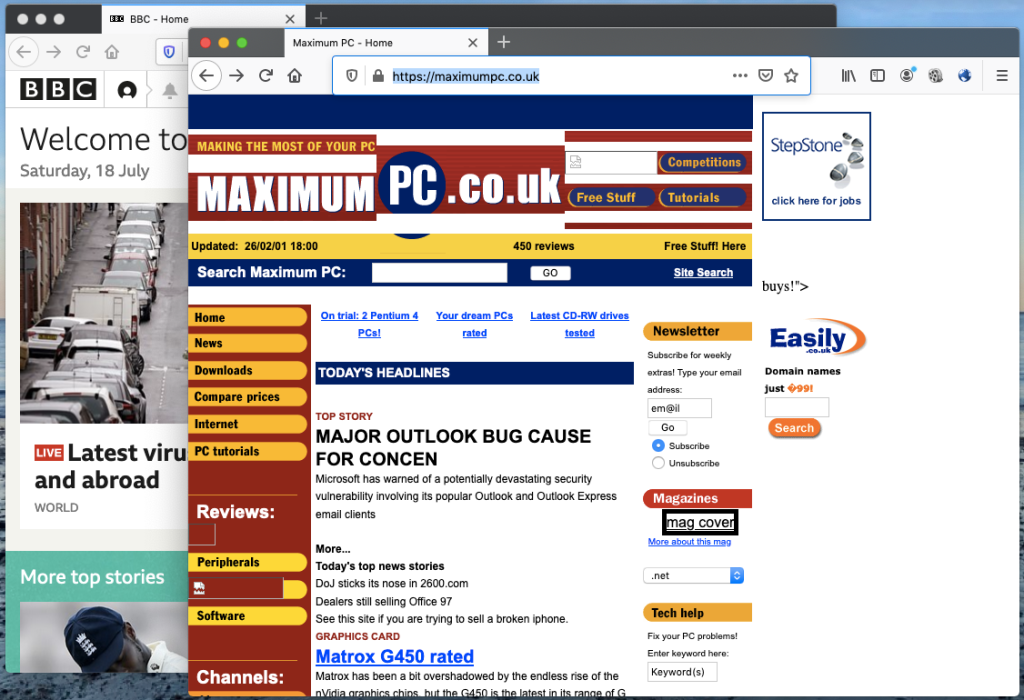
The Maximum PC site is still online to this day, as it was when it was abandoned in 2001
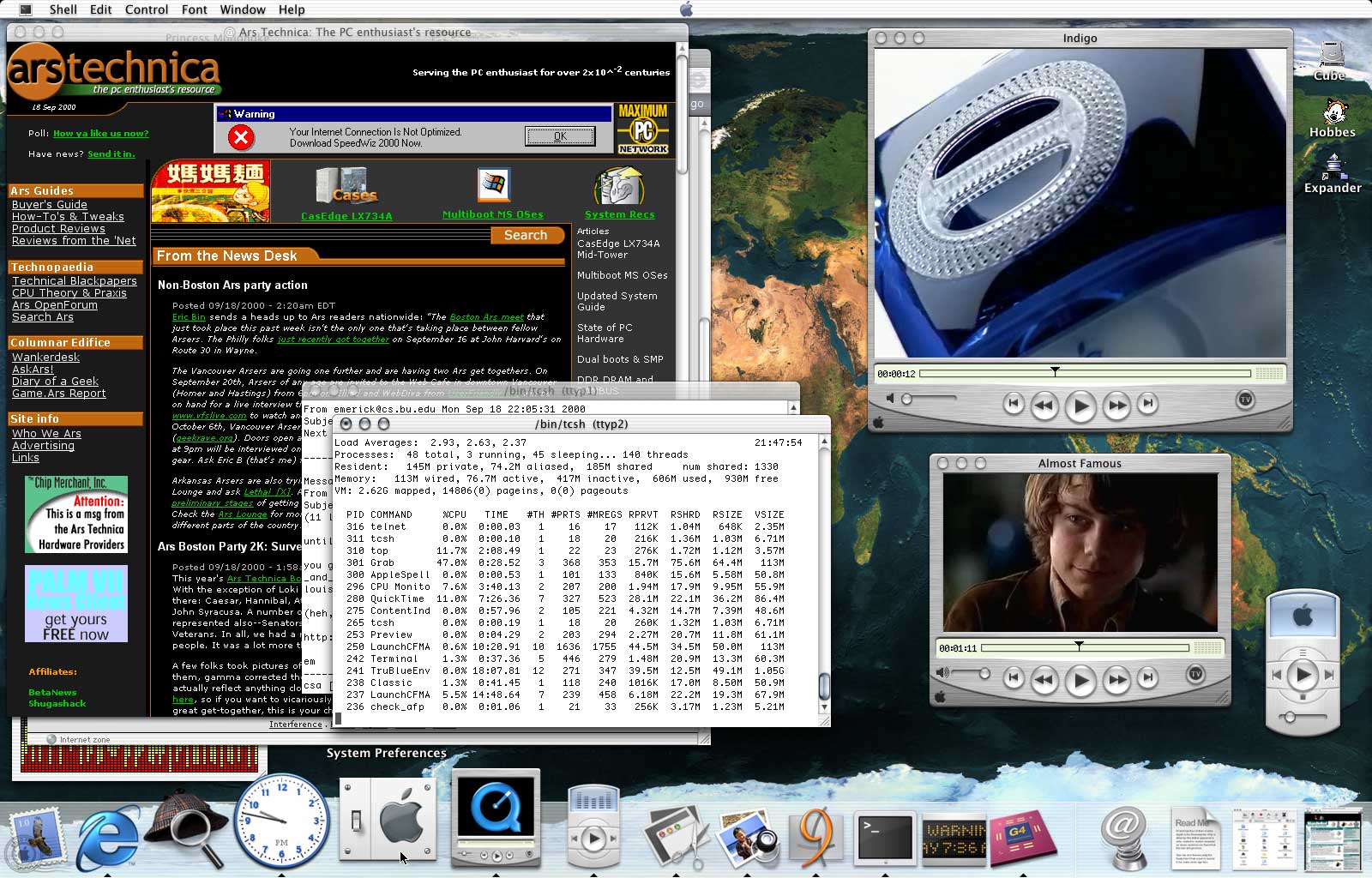
On the most recent episode of ATP, John Siracusa referenced once of his early Mac OS X reviews. This prompted me to revisit his review of the Mac OS X public beta, as the evolution of computer interfaces is something that I find fascinating.
In one of his screenshots, he shows the Ars Technica home page. At the top of the page is a banner informing readers that Ars is part of the “Maximum PC Network”. I immediately recalled this web site, as it was closely related to many other publications I was into at the time, including .net magazine. So, I decided to see what became of the Maximum PC Network by visiting its site in 2020. I expected to find a domain for sale, or it redirecting to a parent company - but no, to my surprise, maximumpc.co.uk is still online, and is still showing the date of when it was presumably last updated - 26th February 2001. Complete with references to em@il and asking whether Windows XP is worth upgrading to, the site is straight out of 2001, but amazingly - still online. Some server, somewhere in 2020 has been left running sine 2001.
I’d love to know the story of how this has happened - how does someone forget a web site existed, but continue to pay for its hosting – even going as far as renewing the SSL certificate each year? That said, I think it’s great and I wish more web sites could stay online once they are abandoned.