Your Default Network is a pattern of neurons that fire when you are not actively concentrating on anything. It’s what we call daydreaming. It has been linked to creativity and our ability to reflect on the past, and prepare for the future. Yet with so many distractions at our fingertips, it’s easy to forego daydreaming under the guise of ‘being productive’ or simply wanting to counter boredom. This is not an original thought by any means. I am yet to read How to Do Nothing: Resisting the Attention Economy but it appears to talk about this phenomena (and it’s on my reading list).
I think back to before I had a smartphone. I would sit at a bus stop waiting and just think. 20 minutes could go by where I would often do nothing except listen to music and watch the world go by. Of course there would be often be times when I had a book, magazine, or a game of snake to help pass the time - but I certainly let my mind wander more than I do now.
With that in mind, I recently made a few changes to my iPhone setup that I have so far found to be beneficial to my overall mood and happiness levels:
Delete Newsapps: The media always makes the world seem worse that it really is. If a plane lands successfully we don’t consider it news. If a plane crashes, then it’s news. Not having my default cure for boredom being to pick up my phone and open The Guardian or BBC News has freed my mind to think about more worthwhile things. Reading the news and being aware of current events is an important and many would say an essential aspect to living in a democracy, but reading it constantly is not necessary.
Fewer Podcasts: Podcasts are a wonderful form of entertainment. They are the perfect for introverts: conversation with no response required. I find myself listening to them when I’m walking, running, doing household and garden chores, and even when falling asleep. Yet I’ve recently started to realise that this isn’t a necessarily a good thing, and reading this recent post helped me solidify the thought. While some podcasts can be informative, and pure entertainment is important, there’s only so much I need. I’ve recently tried to just ‘do nothing’ as I do the washing up or go for a walk, and while it initially felt strange, I have now actually started to enjoyed it. I won’t be going cold turkey: 10 mile runs without any distraction are not on the cards just yet.
Separate business email: About a month ago I was sitting down to relax at the end of a long day and my phone pinged. It was an email from my gas and electricity company telling me that my bill had increased three-fold. It made me think how odd it was that my utility company is able to reach me at 10pm at night. Thankfully days later I found out that the increase was simply because I’d been bit lax with submitting my meter readings and they’d made a poor estimate, but nevertheless it spurred me into taking action to prevent such intrusions happening again. I separated out business from personal email, and not just my work and personal email (those were of course already separated) - I’ve setup separate accounts for my private ‘business’ related subjects. Anything to do with my property, utilities, TV Licence, car etc. goes to the ‘business’ account. Anything fun and relaxing - mainly emails from family and friends and newsletters go to the personal account. Only the personal account is on my phone. I check my business account two or three times a day, and times of my choosing. Sometimes I don’t check it for days, and I’m much happier for it.
Social Media: I’ve written about this before so I won’t belabour the point. Much like deleting News apps from my phone helped rein in the ‘default’ behaviour of reading the news when bored, deleting social media apps from my phone did the same. I found a nice trick that allows me to incorporate a few Twitter accounts into my RSS feeds. Without the temptation to ‘like’ or ‘retweet’ and with no algorithm recommending content in attempt to try and increase my engagement, I find I get the benefits of Twitter (access to knowledge and opinions I wouldn’t have otherwise had) but without many of the downsides (which are well documented).
Those are my tweaks for 2021 and they won’t of course work for everyone. There are no doubt times when we need to be distracted and it’s good for our mental health. In those cases, I’m going to try reading books, listening to audiobooks or even getting back into coding. Let me know if you have tried any of the above or have any other recommendations.
2020 was such an unpredictable year, but hopefully 2021 will be much better. In terms of the big themes for technology, here are my thoughts on what is likely to be on our collective minds over the next year.
Regulation, Regulation, Regulation
The Internet is about to get more regulated, and it’s long overdue. Whether it will be done right is still to be seen. Recent attempts (such as EU cookie banners) have missed the mark and not achieved anything except ruining the web experience for everyone. The UK Government is set to introduce an “online harms” bill which, on the face of it looks positive: an internet with less online harm has to be much better than the current state of social media right now. However I have two concerns. One being that an ever-widening definition of “harm” might lead to overzealous censorship, though the list of harms it seeks to cover seems very reasonable. The second is the burden placed on platforms. We saw with GDPR that some US sites (such as the LA Times) simply blocked access to EU visitors as dealing with GDPR wasn’t worth their effort. California later implemented its own regulation similar to GDPR which meant many US sites ended up relenting and complied with GDPR. Might the same happen here? Additionally, would a company like Twitter have been able to flourish with the burden of huge fines for not policing content? If not (and I think likely not); will this legislation end up cementing the place of the current social media platforms as gatekeepers, making it harder for startups to compete? Will we simply see groups who get banned from the major platforms move to less centralised systems? $10/month gets you a Linux box from Linode, or for those with a decent uplink, a Raspberry Pi, either of those running Discourse could suffice as a small scale alternative to the big platforms. What happens then? Are hosting companies and ISPs also responsible for enforcing moderation? While I think it’s a good that the Government are trying to solve the problems we face online, there is also the law of unintended consequences.
The iPad Will Be Reinvented
In 2020 Apple really pushed the boundaries of what we can expect from a laptop in terms of performance. All of a sudden we have laptops with 20-hour battery life that are faster than even most high-end Intel laptops. At the same time, Apple neglected to significantly update the iPad line in 2020, with only slightly faster processes and new colours coming to the midrange, and a LIDAR sensor being added to the top of the line iPad Pro. This leaves the iPad in a weird position - unless you need the Apple Pencil for drawing - there is no longer big productivity draw. It used to be an iPad with a keyboard dock and could get you a fast, ultraportable laptop-like device with amazing battery life. Part of my disappointment with the iPad over the past 10 years is that what stated out as the next thing in computing has really gone nowhere - it’s simply evolved to become a laptop with a touchscreen. Now that actual laptops have many of the same benefits of the iPad but without the draconian App Store restrictions, where does this leave the iPad? As a sofa-based content consumption device it makes sense, but people aren’t buying £770 tablets for Facebook and Netflix. Apple must surely see this, and so I am expecting something at the high end that is a hybrid of a Mac and an iPad. Something with the elegance and convenience of an iPad, but with the power of a proper laptop.
GPT-3 Style Language Models Will Challenge the Media
I have only had access to GPT-3 for a few weeks, but already I am amazed by it. The biggest surprise to me was that you don’t need to train it with much of your own data, you simply give it a prompt such as “Summarise the following text for a 10 year old” or provide it with a list, and it will continue the list. There are many exciting and positive applications of this technology, but while Open AI, the company behind GPT-3 is being ultra-responsible by only allowing access via an API key (that can be shut off in the case of misuse), and is providing developers with an avenue to report potentially dangerous output, it is only a matter of time before someone else who is not as conscientious will invent something similar to GPT-3. This could exacerbate problems we already see in online media at the moment. Already the web is full of numerous “news sites” that purport to be providing journalism, but are in fact thinly vailed opinion pieces short on facts. If these sites could instead churn out content with the click of a button, it will make the problem of fake news even worse. It will be up to our already struggling media sector to resist the temptation to join the race for our attention with clickbait headlines, and instead double-down on the reporting of objective truth. I expect questions about how such media is paid for, and who has access to it to become even more apparent in 2021. Paywalls for example are good idea in some respects, as they do not incentivise content written purely to capture more page views (ad impressions), but they also leave the majority outside of the paywall with the lower quality content. Thankfully in the UK we have the BBC, but even that is under threat. While I have faith that most will have the critical thinking skills not to be taken in by fake news (AI generated or not), we have seen in recent years that it can be very easy to be fooled - especially when it’s something you’re inclined to agree with anyway.
Those are just a few topics I think many of us will give thought to in 2021. Depending on how the pandemic plays out, I’m sure there will be many, many others too. With vaccine rollouts underway, let’s hope we can get back to some sense of normality soon. What do you think 2021 will bring? Let me know in the comments.
I’ve changed the domain of this site to be imarc.co.uk. I had originally gone with imarc.me when I started the site earlier this year, but over the summer I jotted down all the domains I own, their annual cost and divided that figure by 12 and realised I was spending more than I wanted to on domain names. I’ve had the .co.uk domain since 2002 and don’t plan on relinquishing it anytime soon, so I figured why not use it? Additionally, the old-school internet user in me still can’t help thinking that any domain not ending in .com, .net, .org or a country TLD isn’t a real domain (Readers who know their Internet history will know that .me stands for Montenegro, and is actually not a generic TLD, but it gets used like one). imarc.co.uk been home to many of my home pages before, including my own CMS at one point. Now it’s home to this blog. The old .me domain will eventually expire and be bought by a domain squatter, so please update your bookmarks/RSS reader. Ultimately, it’s unlikely anyone will notice as content is what really matters, but in my mind, the small things matter too.
Secondly, I’m retiring my old personal blog Lost in Logic. The purpose the site you are reading now was to start afresh and only post content I believe adds something to the nonstop deluge of technology commentary we find online everyday, whereas my older blog was holiday photos intermixed with album reviews with the odd gadget review thrown in. It wasn’t very focused. Moving it between various web hosts over the course of 10 years also took its toll - many of the images are broken in older posts. That said, it’s still fun to be able to look back so I will keep the site online at this new URL: https://archive.lostinlogic.wickens.org.uk (I have migrated a few recent posts over to iMarc as I think they fit its theme). Some of my favourite posts were:
According to Loren Brichter, Chrome is bad. He’s been having some slowdowns on his Mac, and removing Chrome along with its associated update process called KeyStone seemed to fix the slowness issues. Other people have concurred, while others have understandably demanded some evidence, comparing it to the myth that closing apps on an iPhone speeds it up. (As an aside, when I was an iOS developer, I remember watching the iOS ‘free memory’ count go up when I swiped away an app. I also remember that Safari would release rendered pages from memory when system memory was low, meaning it would have to load and render the pages again as you switched between tabs. Other apps would likely release resources in response to ‘low memory’ broadcasts from the operating system too. Therefore in years past, there is no question that closing apps would at least speed up some aspects of your phone. Whether the practice is still a net-gain in 2020 when our devices have a lot more RAM is less certain, and will depend on your usage patterns.)
So is Chrome bad? My take is yes, probably, but not because of it’s auto-updater. The system slowness issue doesn’t appear to effect everyone, and may be an unintentional bug by either Google or Apple. Chrome is of course funded by advertising and so is likely using your browsing data in ways you might find creepy. With Microsoft Edge now being based on Chromium, I’m not sure why anyone would use Chrome in 2020. Edge supports the same plugins, renders pages the same and includes lots of easy-to-find privacy enhancing settings that are burried in Chrome, and no it doesn’t use KeyStone to manage its updates. If you haven’t already, I urge you to give Edge a try.
The right airport is a year old, the left one a few weeks.
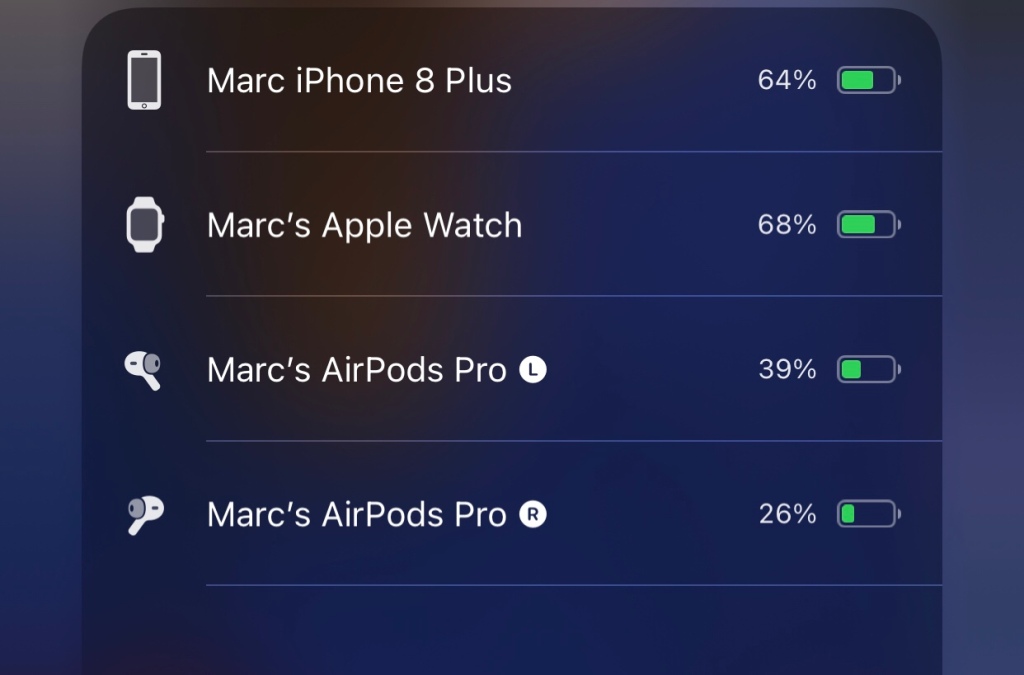
I’ve had my AirPods Pro just shy of one year now. The left AirPod however was replaced a few weeks ago. I used them today for a couple of hours and noticed for the first time how much faster the battery drained on the older AirPod. 13%! What a difference a year makes. There could be other explanations of course, battery conditioning being the main one. (It is a common belief that our electronics are able to gauge how much battery power is remaining, however they cannot; they are only able to estimate how much power has been used and subtract that from the last known total capacity of the battery.) Additionally, we’ve only had the luxury of smart charging since September. The degradation won’t be as pronounced for people buying new AirPods today.
It would be an understatement to say that 2020 has been a strange year. With much of the world in and out of lockdowns, something none of us with have though conceivable only months prior, it has been a watershed moment in many ways. While the news has been consistently awful as we’ve been stuck inside I have taken to appreciating the value of smaller joys of inner life: music, books and podcasts and coding.
At this stage in his career, you could be forgiven for being tempted to pass on a solo album by James Dean Bradfield. It’s only the second such album from the Manic Street Preachers singer, but even after all this time it’s perhaps one of the best of his career, including his Manics work. He’s stated in interviews that being a solo album he didn’t have the pressure to write a hit single, and so could just go where his mind took him and indulge a wide range of influences. This is a formula that has worked in the past (their first number one single If You Tolerate This Your Children Will Be Next was originally planned as a b-side) but yet so much of the latter Manics career seems to be trying too hard. By seemingly not trying, he has made a masterpiece. The album is fantastic, full of fresh and heavily prog influenced melodies. Inspired by Chilean activist Víctor Jara the lyrics penned by Patrick Jones are also beautiful and perfectly match the mood of the music.
It was released in 2011, but I only got round to reading it this year. It tells the story of a community who live underground a giant silo, in what appears to be a world where the air outside is poisonous. The silo is big enough support most human needs with farms, schools, its own police department and even a mayor. As the story unfolds, we the reader come to doubt the story that inhabitants have been told over the centuries. What really resonated with me while reading this during lockdown was the claustrophobic feeling of being trapped inside for fear of what you might breath in if you step outside. While the situation in 2020 isn’t anywhere near as bad as the events in WOOL, as I read it I couldn’t help feel that I couldn’t have timed it better. The sequels are also pretty good too, so worth picking up.
Manic Street Preachers are one of my favourite bands. So when this little podcast started in January seemingly out of nowhere I was pretty excited. Far from being a love in, the band are approached from the point of view of two non-fans and one mega fan. They then proceed to critically cover the entire Manic Street Preachers discography. Perfect for anyone looking to get into one of the best bands ever.
Being a Mac/iPhone user has its benefits, everything mostly just works - but it’s not very interesting. Early in in lockdown I ordered myself the latest Raspberry Pi, a £35 ARM computer. After adding a case, fan, HDMI cable and memory card, it was closer to £100 - but still not that expensive all things considered. Within days, I rekindled my love of messing about with computers. I gained a newfound respect for Linux, the free operating system that can do literally anything. I was amazed how much I remembered from my days as a developer. I soon had an AirPlay server up and running allowing me to beam music from my iPhone to my Sonos without having to bother with the frustrating Sonos app. I had an old portable hard drive and SMB network share acting as a NAS drive, PiHole blocking adverts across my entire network, and WireGuard acting as VPN so I can get the benefits of PiHole and access my files when I’m out of the house (not that I was leaving the house much during lockdown). I then moved on to playing about with nodeJS and Apache. For a while I’d been looking to learn a new server side technology, having been a .NET/C# developer many years ago, and so an open source stack that runs on a £35 computer was perfect. I can’t stress how cool it is to be able to take an idea, and a few hours later have something working. If coding is not your thing but games are, try RetroPie.
So that was my lockdown entertainment. What was yours?
Christmas in 2020 will obviously be very different for many people, but like many people at Christmas I find myself looking back to my childhood, as let’s be honest, that’s when Christmas is at it’s best isn’t it?
On the topic of looking back, here are two fantastic articles from The Register that are by no means new, but worth a read or reread if you find yourself with some spare time over the lull between Christmas and New Year.
The inside story of the news website that saved the BBC - A detailed look at how BBC News Online started. Back then nobody even knew what a news website should look like or how people would use it. They really were blazing the trail.
I came across this fascinating blog post about how one man and a few Ruby scripts managed to register what he estimates amounts to $1,000,000 worth of domain names. Many of the examples he registered are single word domain names such as cheese.ai and crowbar.io.
This set me wondering whether domain names really matter that much these days? Obviously some people see value in them, much like some people see value in a personalised number plate for their car (Something I have never understood - but each to their own.). A memorable domain name such moonpig.com or comparethemarket.com is genuinely useful for people looking to find you online, whereas a bespoke vehicle number plate is there to satisfy the owner. How many successful businesses use generic, one-word domain names anyway? For a while British Gas advertised their online presence as www.house.co.uk, but these days it redirects to www.britishgas.co.uk. Clearly trying to associate a well known brand with a tangentially related word didn’t work out. The exception might be offering email services: your.name@cheese.ai would be pretty cool, and hey.com is an obvious recent example - but again I don’t think many people are that bothered about their email address these days. For my job I have to review a lot of CVs, and I’m often surprised how many people who are clearly very qualified, have been in the industry for a while, yet have an email address with gmail.com or hotmail.com. When a domain costs around £10 a year, it seems like a no-brainer to have your own domain for professional reasons - yet most people don’t.
So I’ve come to that conclusion that for most people domains do not matter. The web is now search-first. Gone are the days of meticulously typing http://www.bbc.co.uk into your web browser and smashing down with great satisfaction on the enter key; for most people, their browser either suggests the site or a Google search does instead. If domains don’t matter, maybe I should start registering random strings instead? mimcxsxuqibozfq.com is it!
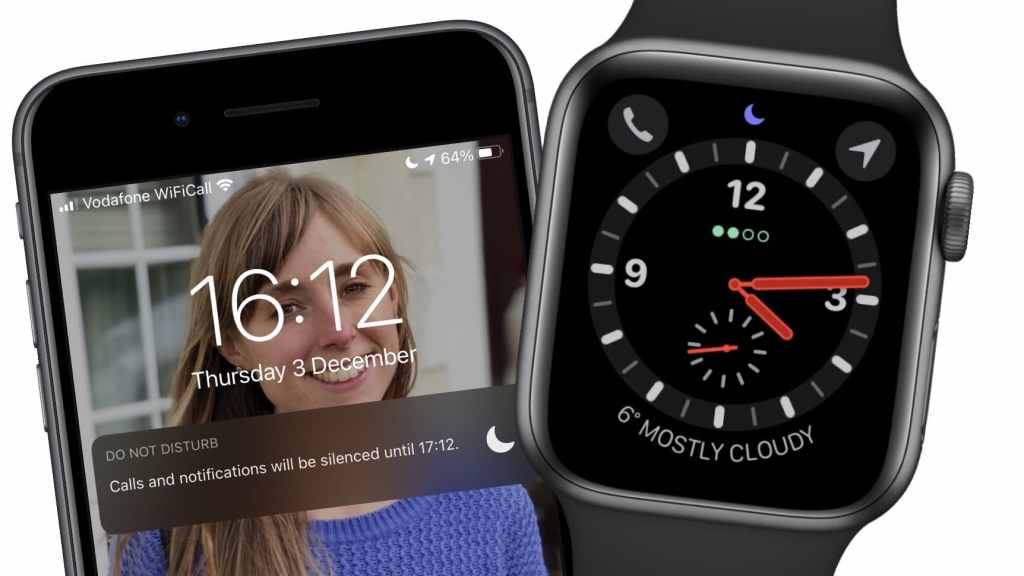
I’d really like to see mobile operating systems make less of a fuss when you have “Do Not Disturb” switched on. While the feature is a useful one, having a banner across the home screen, or an omnipresent icon at the top of the watch face only seeks to signify that not wanting to be disturbed is an exceptional state, not the norm. The default mode is “Disturb Me”.
Instead, I wonder if the default should in fact be “Do Not Disturb” and that we should have to choose when we want notifications - with options to allow close friends and family to override the setting of course. If someone outside your close circle phones outside of your “Disturb Me” hours, Siri could take the call and inform them of when you’ll be available.
It is one of the most contentious aspects of video game playing – a debate where opposing sides literally cannot see each other’s perspective. When the Guardian ran an article asking why a large minority of game players invert the Y axis on their controls – meaning that they push their joypad’s thumb stick down to move upwards on the screen – the response was huge. Hundreds of comments vociferously arguing why axis inversion was the only way to navigate a game world, and hundreds more incredulously arguing the opposite.
I am one of those people who cannot play a game without inverting the Y axis. I struggled with early 2000’s classic TimeSplitters 2 because back then there was no systemwide setting to change the preference on PlayStation 2 (though I think the original Xbox had one). Why do I have such a preference? I can only think it’s because I used to play a lot of flight simulators, but will keenly await the results of the study.